Physical Address
Delta Corner Tower,
Waiyaki Way, Westlands, Nairobi, Kenya.
Contact us:
Email: info@todaysw.com
Physical Address
Delta Corner Tower,
Waiyaki Way, Westlands, Nairobi, Kenya.
Contact us:
Email: info@todaysw.com

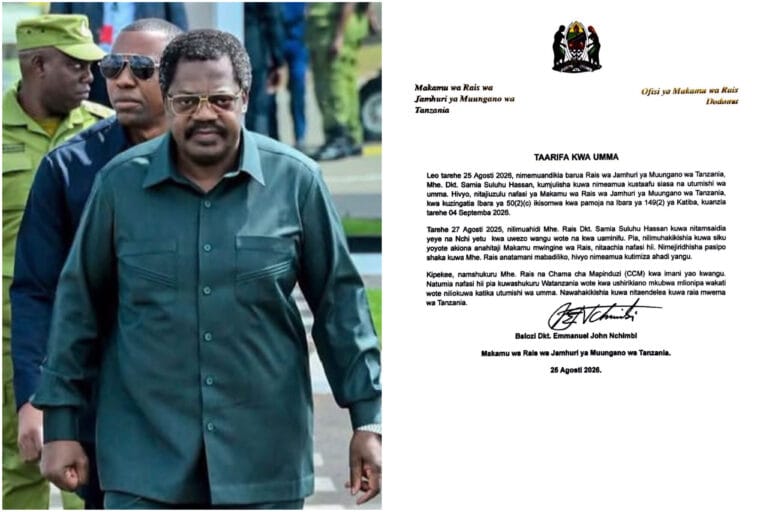
Tanzania’s government is preparing measures to bring down cement prices within a week after Prime Minister Mwigulu Nchemba acknowledged growing complaints over the rising cost of the construction material in several parts of the country.
Nchemba said on Tuesday, September 15, that he had instructed government experts to establish the causes of the increases and develop measures that could make cement more affordable. He made the remarks while addressing residents during a public meeting in Bariadi, Simiyu Region.
“Within one week, I have instructed the experts to find a solution,” Nchemba said, adding that the government would subsequently announce measures intended to reduce prices.
According to the prime minister, a bag of cement has risen above TSh26,000 (US$9.8) in some parts of Tanzania, while prices in some border regions have reached as high as TSh32,000 (US$11.9).
The increases have implications beyond individual home builders. Cement is a major input in residential construction and public and private infrastructure projects, meaning sustained price increases can raise overall construction costs.
Nchemba said the government’s objective was to ensure ordinary Tanzanians could continue to afford building materials for homes and other development projects.
During his working visit to Simiyu, the prime minister also addressed concerns surrounding cotton, an important source of income for farmers in the region.
He directed the Ministry of Agriculture to consult cotton stakeholders and submit proposals for an improved purchasing system within a month. Reports from his Simiyu visit said the government intends to compare previous purchasing arrangements with the current system to determine which approach would provide greater benefits to farmers without undermining production.
“I have received this issue,” Nchemba said, directing the ministry to review systems previously used in the sector and determine which arrangement would better protect farmers’ interests.
The government is expected to receive the recommendations in mid-October.
Nchemba also announced a change in the government’s approach to taxing newly established businesses, saying entrepreneurs would be given time to establish their operations before facing the tax burden.
Under the approach described by the prime minister, a newly established business would be allowed one year to stabilize before beginning to pay the applicable taxes, rather than facing tax demands immediately after starting operations.
The three announcements on cement, cotton and new businesses address different areas of household and commercial activity. Still, the most immediate decision is expected within the coming week, when the government is due to announce how it intends to respond to the sharp rise in cement prices.