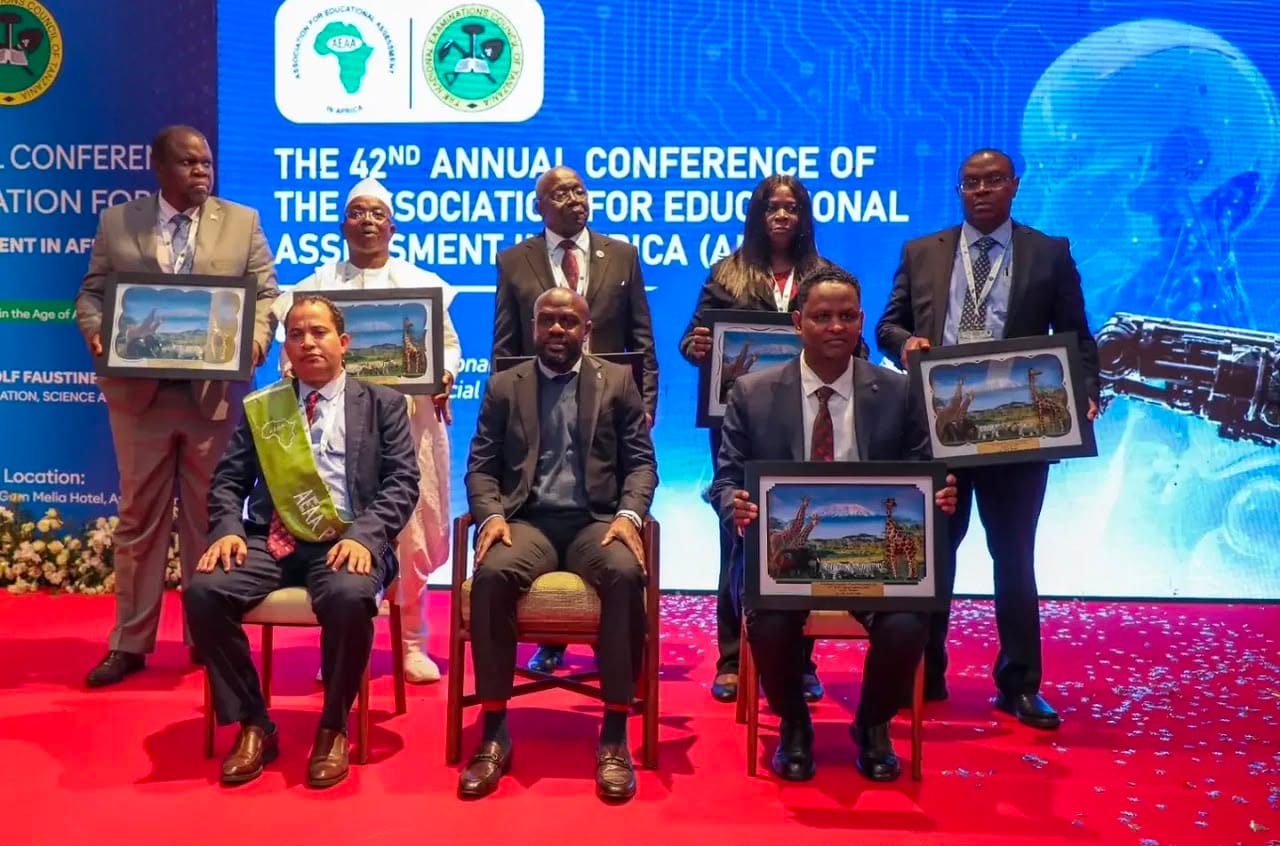
Tanzania’s NECTA Executive Secretary, Prof. Said A. Mohamed, has assumed the presidency of the Association for Educational Assessment in Africa (AEAA), pledging to promote cooperation, transparency and accountability during his 2026–2027 term.
Prof. Mohamed formally accepted the position on Thursday, August 20, 2026, at the close of the 42nd AEAA Annual Conference in Arusha, Tanzania, bringing the meeting to an end after discussions on the future of educational assessment across Africa.
Speaking after taking up the leadership role, Prof. Mohamed said his priority would be to protect and further develop the association so that it remains an important platform for African countries to discuss and address challenges facing educational assessment.
He said his administration would emphasise cooperation among members, arguing that the association could only achieve its objectives through strong collaboration.
The new AEAA president also called for African education systems to keep adapting to technological and economic changes, particularly the rapid development of artificial intelligence, skills-based education and science, technology, engineering and mathematics (STEM).
He said education systems must also respond to the changing needs of Africa’s industrial sector so that students acquire skills that can support economic development and employment.
Prof. Mohamed said Africa’s young population remains the continent’s greatest resource, making access to quality and equitable education essential to its future.
He also pledged to uphold transparency and accountability within the AEAA leadership, including ensuring that leadership transitions take place on schedule.
He said he expects to hand over the presidency in August 2027, in line with the association’s leadership arrangements.
His election comes as African education authorities face growing pressure to rethink how students are assessed amid the expansion of artificial intelligence and the changing skills required by employers.
The 42nd AEAA Annual Conference brought together participants from 28 countries in Africa and beyond, with discussions focusing on the use of artificial intelligence in education, particularly in assessment, examination and evaluation.
Prof. Mohamed had earlier said during the conference that Tanzania and other African countries could not afford to remain behind as AI continues to reshape different sectors, including education.
The new AEAA leadership is therefore expected to focus on strengthening cooperation among assessment institutions while helping African education systems respond to technological change without losing the role of professional and human judgment in educational decisions.