


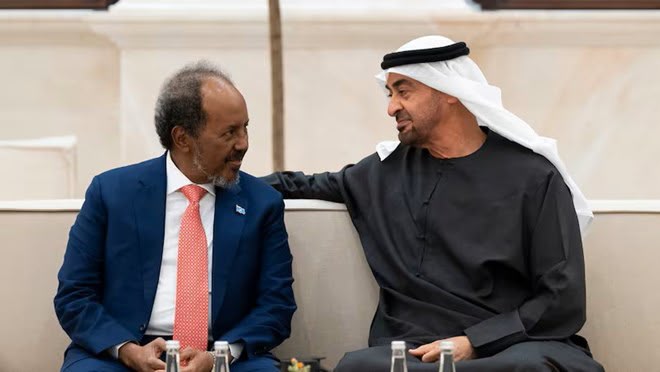
Somalia’s latest confrontation with the United Arab Emirates (UAE) is raising questions about who controls the country’s strategic infrastructure, security partnerships and foreign relations, as President Hassan Sheikh Mohamud‘s administration pushes back against agreements it says were negotiated outside federal authority.
In a statement issued on Wednesday, November 18, 2026, Somalia’s Ministry of Foreign Affairs called on the UAE to conduct all its relations with the country through the Federal Government, rejecting what it described as continued interference in Somalia’s internal affairs.
The ministry said foreign engagements and security arrangements that bypass Mogadishu undermine the country’s sovereignty, territorial integrity and national unity. It also warned that the government would take all necessary lawful measures to protect those interests.
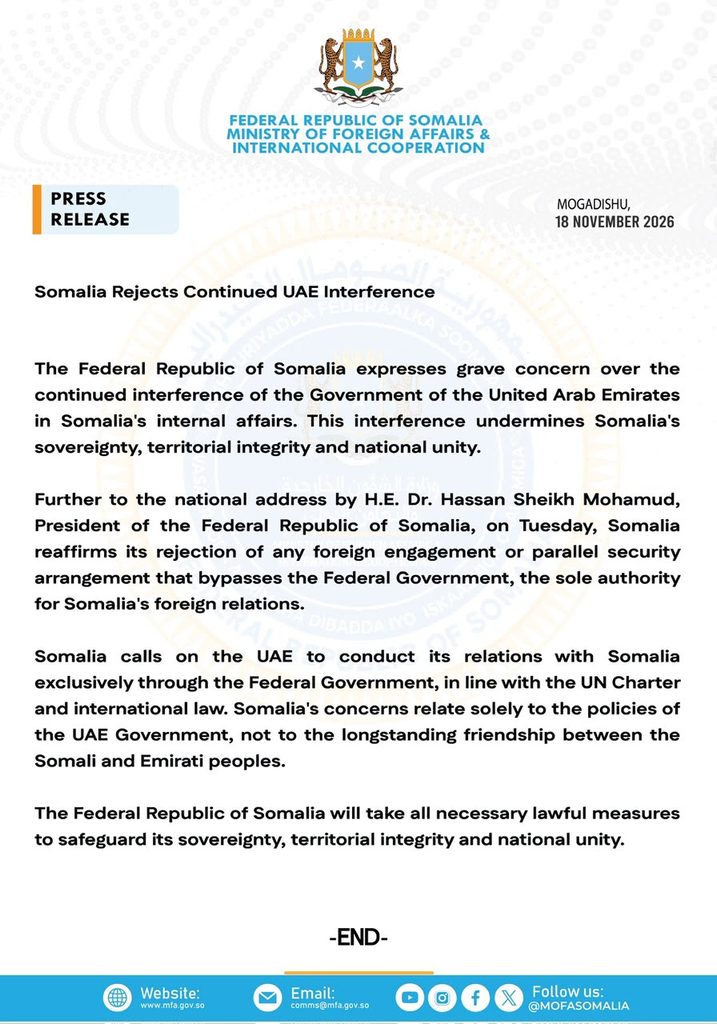
The statement followed a televised address by President Mohamud on Tuesday, in which he accused the UAE of supporting political and security structures operating outside the authority of his administration.
At the center of the disagreement is a longstanding dispute over the extent of Mogadishu’s authority over Somalia’s federal member states and their relationships with foreign governments.
The UAE has developed significant economic and security relationships across Somalia, including investments in strategic ports and support for regional security forces. Some of these relationships have involved administrations that maintain their own political and security arrangements and have frequently disagreed with the Federal Government.
In January 2026, Somalia’s Council of Ministers announced the cancellation of all agreements with the UAE, including arrangements covering port operations, defence and security cooperation.
The decision affected agreements involving Berbera, Bosaso and Kismayo, three strategically important ports along the Somali coastline.
However, the announcement exposed the limits of Mogadishu’s authority over regional administrations. Somaliland, Puntland and Jubbaland rejected the federal government’s decision, maintaining that their existing arrangements with the UAE would continue.
The disagreement is particularly significant because the ports involved are not simply commercial facilities. Their locations along important maritime routes give them economic and strategic value, attracting investment and foreign interest in the wider Horn of Africa.
Berbera, in Somaliland, has been developed through a partnership involving Dubai-based DP World, while Bosaso in Puntland is also connected to a long-term port concession involving the company. Kismayo, in Jubbaland, has likewise featured in Somalia’s dispute over foreign agreements.
The UAE’s involvement has also extended beyond commercial investments. Reuters reported in January that the country had trained Somali troops and was providing salaries and logistical support for approximately 3,400 military police and special forces personnel, according to senior Somali sources.
That security relationship has become another point of disagreement, with President Mohamud arguing that foreign-supported forces operating outside the national command structure weaken the country’s security institutions.
In his latest address, the President also accused the UAE of providing political and financial support to regional administrations, contributing to divisions between Mogadishu and other political actors.
He further alleged that the UAE had been involved in activities connected to the recognition of Somaliland by Israel and referred to an incident in January in which he said Emirati involvement allowed a militia leader fleeing Yemen to travel through Berbera without federal authorization.
These are allegations made by the Somali President and have not been independently established by the statements released so far.
The latest diplomatic position also reflects Mogadishu’s attempt to distinguish its dispute with the Emirati government from the historical relationship between the two populations.
The Foreign Ministry emphasized that Somalia’s concerns relate to the UAE government’s policies rather than the longstanding friendship between Somali and Emirati people.
The UAE’s response to the latest accusations was not included in the ministry’s statement. The country has previously denied allegations of interference, while its authorities did not immediately comment on Somalia’s January decision to cancel the agreements.
For Somalia, the challenge extends beyond its diplomatic relationship with Abu Dhabi. The government must also contend with regional administrations that have maintained their own foreign partnerships and have previously rejected Mogadishu’s attempts to terminate them.
That leaves an important question unresolved: whether the Federal Government can enforce its position across the country when some regional authorities continue to defend agreements negotiated directly with foreign partners.
The dispute is therefore about more than the future of relations between Mogadishu and Abu Dhabi. It also exposes the unresolved question of how power, foreign relations and control of strategic national assets should be shared within Somalia’s federal system.




Comments0 ShowHide