


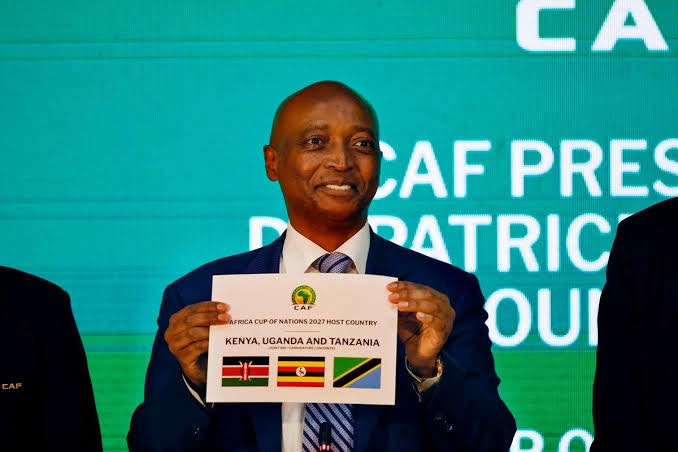
The Confederation of African Football (CAF) has officially recognized Kiswahili as one of its five official languages, placing it alongside English, French, Arabic and Portuguese in a landmark decision for East Africa and the wider African continent.
The decision was adopted on Saturday, November 21, 2026, during CAF’s 48th Ordinary General Assembly in Abuja, Nigeria, where representatives of the continental football governing body’s 54 member associations approved the recognition.
In its official announcement, CAF stated that Kiswahili joins French, English, Arabic and Portuguese as an official language recognized under the CAF Statutes. The organization said the decision reflected its commitment to embracing Africa’s linguistic and cultural diversity while strengthening the representation of African languages in football administration across the continent.
The successful campaign was spearheaded by the Tanzania Football Federation (TFF), with support from the Football Kenya Federation (FKF) and the Federation of Uganda Football Associations (FUFA), which submitted supporting letters for the proposal.
CAF President Patrice Motsepe announced the decision following the vote, congratulating Tanzania, Kenya and Uganda for their contributions to securing official recognition for the language.
According to TFF, the initiative had been pursued for approximately three years, with Tanzania working alongside its East African neighbours to advance the proposal. The process also received the backing of the Tanzanian government, with President Samia Suluhu Hassan endorsing the country’s involvement in the campaign.
The recognition carries particular significance for East Africa, where Kiswahili serves as a widely spoken language of communication across national borders. In Tanzania and Kenya, it holds an established place in everyday communication, while in Uganda and other neighbouring countries, its use continues to connect communities with different linguistic backgrounds.
The decision also comes at a significant moment for regional football. Tanzania, Kenya and Uganda are jointly preparing to host the 2027 Africa Cup of Nations (AFCON), an arrangement expected to bring together teams, officials, journalists and supporters from across Africa.
With the three countries working together on the continental tournament, the recognition of Kiswahili provides an additional opportunity to showcase East African identity and linguistic heritage on one of Africa’s biggest sporting platforms.
Beyond its regional significance, the decision gives Kiswahili a formal place in the administration of African football, extending its presence in an institution whose activities reach all corners of the continent.
The language is already spoken across several African countries, including Tanzania, Kenya, Uganda, Rwanda, Burundi and the Democratic Republic of the Congo, among others. Its use as a common language among people with different mother tongues has also contributed to its growing international recognition.
For Tanzania, Kenya and Uganda, the CAF decision represents the outcome of a regional effort that has given Kiswahili a new institutional platform in African sport. It is also a significant moment for the wider East African community, whose shared linguistic and cultural connections have helped give the language a presence beyond national boundaries.







Comments0 ShowHide