
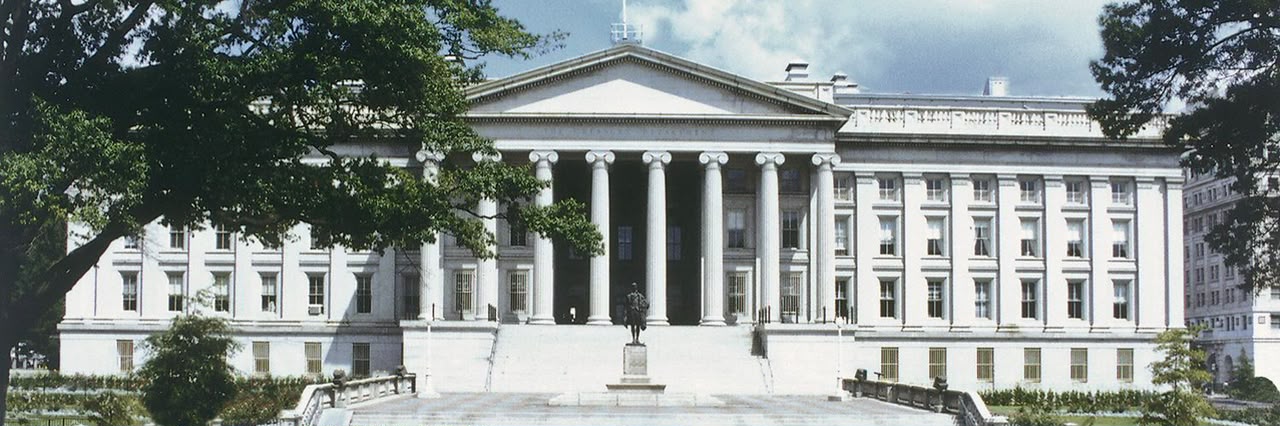
The Democratic Republic of the Congo has publicly thanked United States Treasury Secretary Scott Bessent after the United States imposed sanctions on Rwanda’s Ministry of Defence and a Rwandan financial institution accused of helping facilitate support for the M23 armed group operating in eastern Congo.
In a statement shared on social media on October 28, the Embassy of the Democratic Republic of the Congo in the United States welcomed the measures, describing them as a sign that violations of the Washington Accords for Peace and Prosperity must carry consequences. The embassy called for Rwanda to end its support for M23 and withdraw its troops from Congolese territory.
The diplomatic response followed an announcement by the US Department of the Treasury that its Office of Foreign Assets Control had designated Rwanda’s Ministry of Defence and Zigama Credit and Savings Society under US sanctions rules. Bessent said the measures were intended to hold Rwanda accountable for commitments made under the peace agreement signed by the Congolese and Rwandan presidents in Washington in December 2025.
“Rwanda must halt its support for M23 and withdraw its troops from eastern DRC,” Bessent said in announcing the decision.
The sanctions mark another step in Washington’s effort to pressure Kigali over the conflict in eastern Congo, where M23 and its political-military alliance have seized territory and maintained control over important population centres and mineral-producing areas. Fighting has continued despite diplomatic efforts to end the conflict.
The Treasury Department accused Rwanda’s Ministry of Defence of directing the deployment of thousands of Rwanda Defence Force troops in North and South Kivu provinces, where they allegedly operated alongside M23 fighters and provided military equipment, supplies, logistical assistance and training. The department also said Rwandan forces had introduced surface-to-air missile systems and electronic jamming equipment into the conflict zone, creating potential risks for civilian aviation.
Rwanda has repeatedly denied supporting M23. Kigali has also argued that its security concerns, particularly the presence of the Democratic Forces for the Liberation of Rwanda, known as the FDLR, must be addressed as part of efforts to resolve the conflict. The allegations underlying the latest sanctions are Washington’s official findings and should be distinguished from claims independently established through a judicial process.
The second target, Zigama Credit and Savings Society, is a Rwandan financial institution serving members of the country’s security services. According to the US Treasury, the institution facilitated payments for weapons, ammunition and other military equipment intended for the Rwanda Defence Force. Washington also alleged that it enabled the movement of gold from territory controlled by M23 in eastern Congo to Kigali and handled financial transactions connected to M23 and the Congo River Alliance, the group’s political-military wing.
The US designation blocks property and financial interests belonging to the sanctioned entities that are within the United States or under the possession or control of US persons. It also generally prohibits US persons from conducting transactions involving the designated parties unless an applicable exemption or licence allows them. The restrictions may affect financial institutions and other businesses that conduct transactions with the sanctioned entities.
For Kinshasa, the announcement provides a fresh diplomatic development in its effort to secure international pressure on Rwanda over the conflict. The Congolese government has repeatedly accused its neighbour of backing M23 and violating the country’s sovereignty. By publicly thanking Bessent and the Treasury Department, the Congolese embassy signalled its support for Washington’s latest action and reinforced its demand that the commitments made under the peace agreement be implemented.
The Washington Accords were signed on December 4, 2025, by Congolese President Félix Tshisekedi and Rwandan President Paul Kagame, with US President Donald Trump participating in the diplomatic initiative. The agreement was intended to support an end to the conflict while expanding economic cooperation, trade and investment across the Great Lakes region.
However, the agreement has not stopped the fighting. M23 has continued to hold substantial territory in eastern Congo, including areas around the provincial capitals of Goma and Bukavu, which it captured during its major advance in early 2025. The continuing violence has contributed to displacement and insecurity in communities across North and South Kivu.
The United States had already imposed sanctions on the Rwanda Defence Force and four senior Rwandan military officials in March 2026, accusing them of supporting M23. Washington has also targeted individuals and networks it says contribute to the armed group’s operations and the movement of minerals from conflict-affected areas.
The latest measures therefore extend an existing sanctions campaign rather than represent the first US action against Rwanda’s military establishment. By targeting the Ministry of Defence itself and a financial institution, Washington is seeking to restrict alleged institutional and financial channels supporting the military and the armed group.
The conflict also has an economic dimension. Eastern Congo contains substantial deposits of minerals used in electronics and other industries, including coltan and gold. Control over mining areas and the routes used to transport minerals has become an important part of the wider dispute. The US Treasury has alleged that minerals from areas controlled by M23 enter supply chains through Rwanda, an accusation Kigali disputes.
These concerns have complicated efforts to combine security arrangements with regional economic integration. The Washington Accords envisaged greater trade and investment across the region, but continued fighting and competing accusations have raised questions about whether the security commitments needed to support that economic framework are being fulfilled.
The Congolese embassy’s statement adds to the diplomatic pressure on Rwanda, but sanctions alone do not guarantee an end to hostilities. Their effect will depend partly on how effectively financial restrictions are enforced, whether they alter the behaviour of the parties involved and whether diplomatic efforts can secure verifiable changes on the ground.
The next challenge for Washington and regional mediators will be to translate the new measures into progress towards a lasting ceasefire, the withdrawal of forces where required under the agreements, and protection for civilians living in conflict-affected areas. The DRC has made clear that it wants the latest action to be followed by full compliance with the Washington Accords.
For now, the public exchange illustrates the divide between Kinshasa and Kigali over the conflict and the United States’ continued role in trying to resolve it. The DRC has welcomed the sanctions as a step towards accountability, while Rwanda’s longstanding denial of support for M23 remains central to the dispute. Whether the measures lead to a change in military activity or renewed diplomatic progress will be a key test of the latest US intervention.
 DR Congo
 Rwanda
 United States


Comments0 ShowHide