
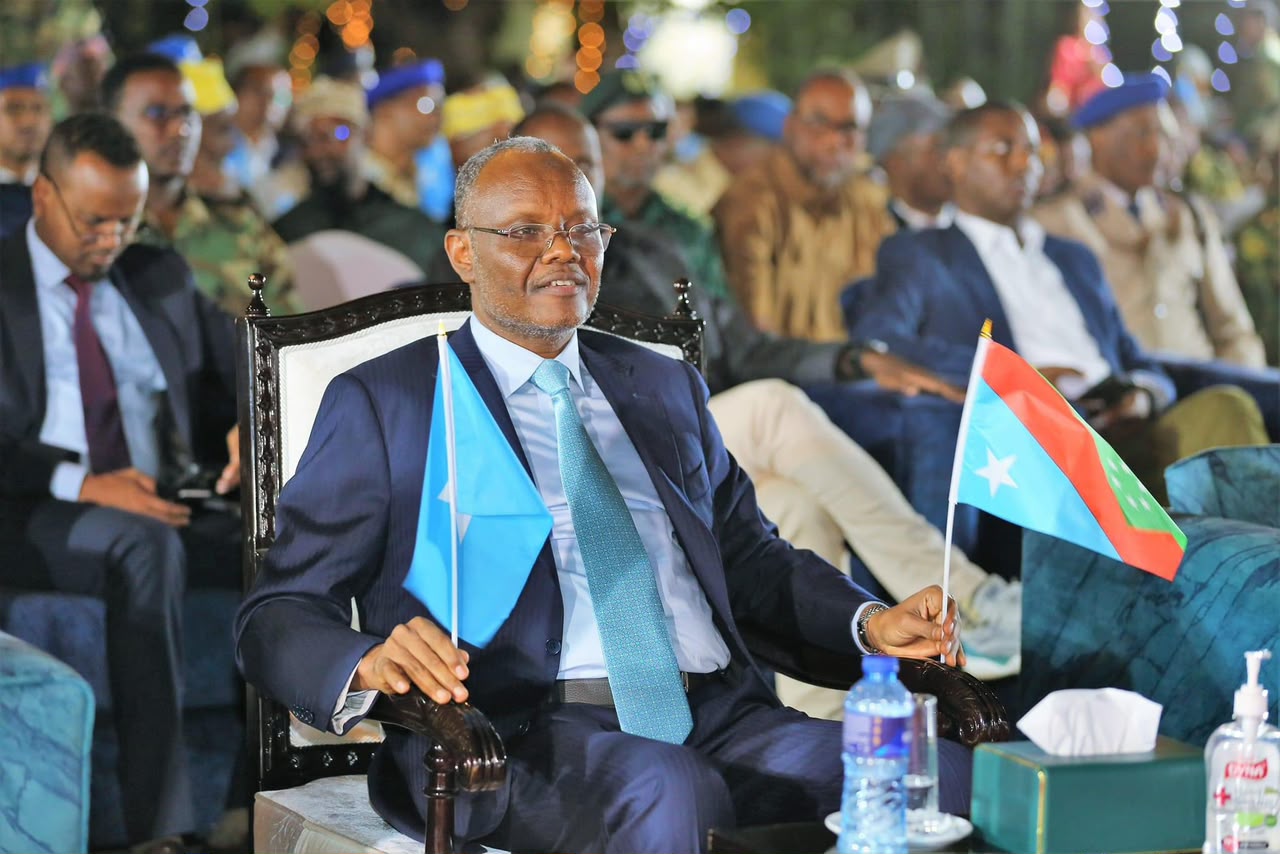
Former Southwest State president Abdiaziz Hassan Mohamed Laftagareen has accused Türkiye of carrying out air operations against civilians in southwestern Somalia, calling on the United Nations, African Union and other international partners to press for an end to the alleged attacks and an independent investigation.
In an open letter dated October 24, Laftagareen’s office said civilians had been killed and injured and homes, livestock and farmland destroyed in areas including Wajid and Baidoa, in the Bay and Bakool regions. The letter alleges that Turkish Bayraktar TB2 drones and F-16 fighter aircraft were involved in the attacks, but the claims have not been independently verified.
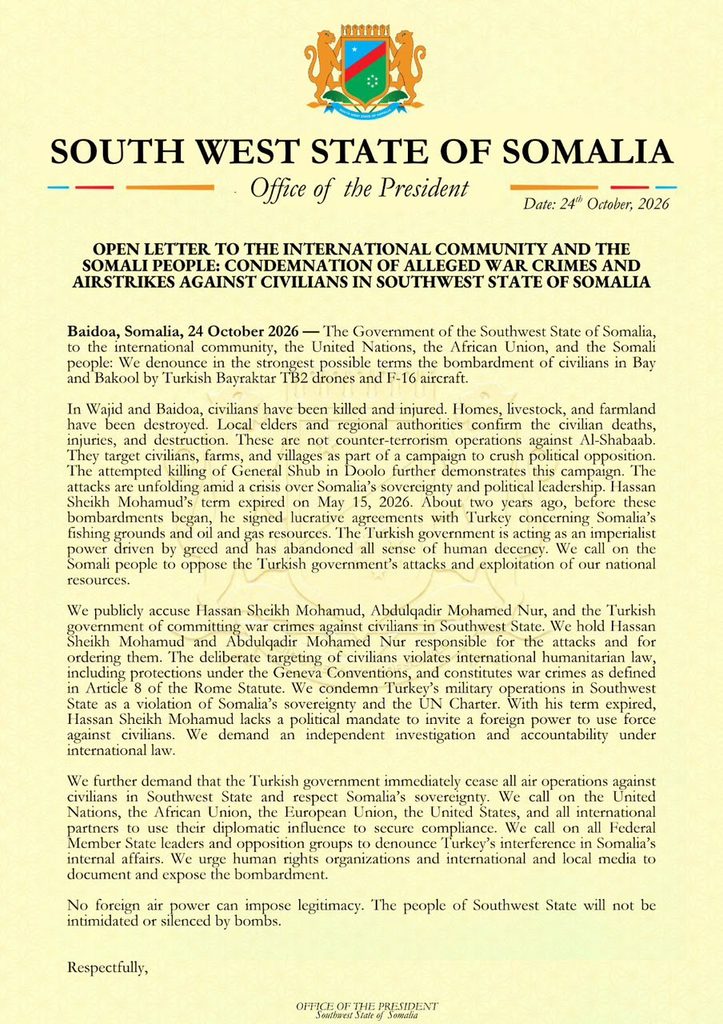
The statement, issued in the name of the Office of the President of Southwest State of Somalia, was addressed to the international community and the Somali people. It accuses Türkiye and Somalia’s federal leadership of responsibility for the alleged operations and calls for those responsible to be held accountable under international law.
Laftagareen’s office argues that the attacks cannot be justified as counterterrorism operations against al-Shabaab, the al-Qaeda-linked militant group fighting Somalia’s federal government. Instead, it alleges that civilian communities and farms have been targeted amid the wider political confrontation between Laftagareen’s camp and the government in Mogadishu.
The letter calls on the Turkish government to immediately halt all air operations against civilians in Southwest State and respect Somalia’s sovereignty. It also urges the United Nations, African Union, European Union, United States and other international partners to use diplomatic pressure to secure compliance, while asking human rights organisations and local and international media to document the alleged attacks.
The accusations place Türkiye’s expanding security partnership with Somalia under renewed scrutiny. Ankara has become one of Mogadishu’s most important international partners, providing military training and other security assistance as Somalia continues its campaign against al-Shabaab. Türkiye also maintains broader economic and strategic interests in the country.
However, the allegations in Laftagareen’s letter remain disputed and should not be treated as established findings. Shabelle Media Network reported on October 24 that the claims concerning the latest alleged air operations could not be independently verified. Previous reporting by Hiiraan Online also found no independently verified evidence establishing that Turkish F-16 aircraft were used in attacks against Laftagareen-aligned forces.
A separate incident in Doolow, in Somalia’s Gedo region, has become part of the dispute. Laftagareen’s camp previously accused Türkiye and Somalia’s federal government of involvement in an attack on General Mahad Abdirahman Aden, commonly known as General Shub. Somalia’s federal government denied carrying out an airstrike and said preliminary information indicated that explosives being handled inside the compound caused the blast. The government announced that the incident would be investigated, but the competing accounts have not established who was responsible.
The latest letter also links the alleged air operations to a broader argument over Somalia’s political direction and control of its resources. Laftagareen criticised agreements between Mogadishu and Ankara concerning fishing and potential oil and gas resources, accusing the Turkish government of pursuing its own interests. The letter did not provide independent evidence to substantiate its wider allegations about the agreements.
The dispute has developed from a prolonged confrontation over leadership, elections and constitutional changes in Southwest State. Federal forces took control of Baidoa, the regional capital, on March 30, 2026, after a political dispute between Laftagareen and President Hassan Sheikh Mohamud’s government. Laftagareen subsequently resigned, but forces aligned with him have continued to challenge the authorities backed by Mogadishu.
The confrontation has involved repeated clashes and competing accusations over the role of al-Shabaab. The federal government has previously accused Laftagareen-aligned forces of links to the militant group, while Laftagareen and his allies have rejected such allegations and accused Mogadishu of using counterterrorism operations to weaken political opponents. These claims reflect the sharply divided accounts offered by the rival sides and require independent verification.
The consequences extend beyond the political leadership. Baidoa and the surrounding region are important centres for people displaced by Somalia’s conflict and drought. Fighting that affects residential areas, roads and farmland risks disrupting access to essential services and livelihoods in communities already facing serious humanitarian pressures.
Laftagareen’s October 24 appeal asks international actors to move beyond statements of concern and use diplomatic influence to stop what he describes as attacks on civilians. It also demands an independent investigation and accountability for those responsible. The letter does not announce a new investigation by an international body, nor does it establish that the alleged use of Turkish aircraft has been confirmed.
The latest appeal adds another dimension to Somalia’s political crisis by directly challenging the role of one of the federal government’s closest international partners. Whether it prompts a response from Ankara, Mogadishu or international organisations remains unclear. For now, the central allegations about the aircraft, the circumstances of the reported civilian deaths and the responsibility for the attacks remain unresolved.
 Somalia
Comments0 ShowHide