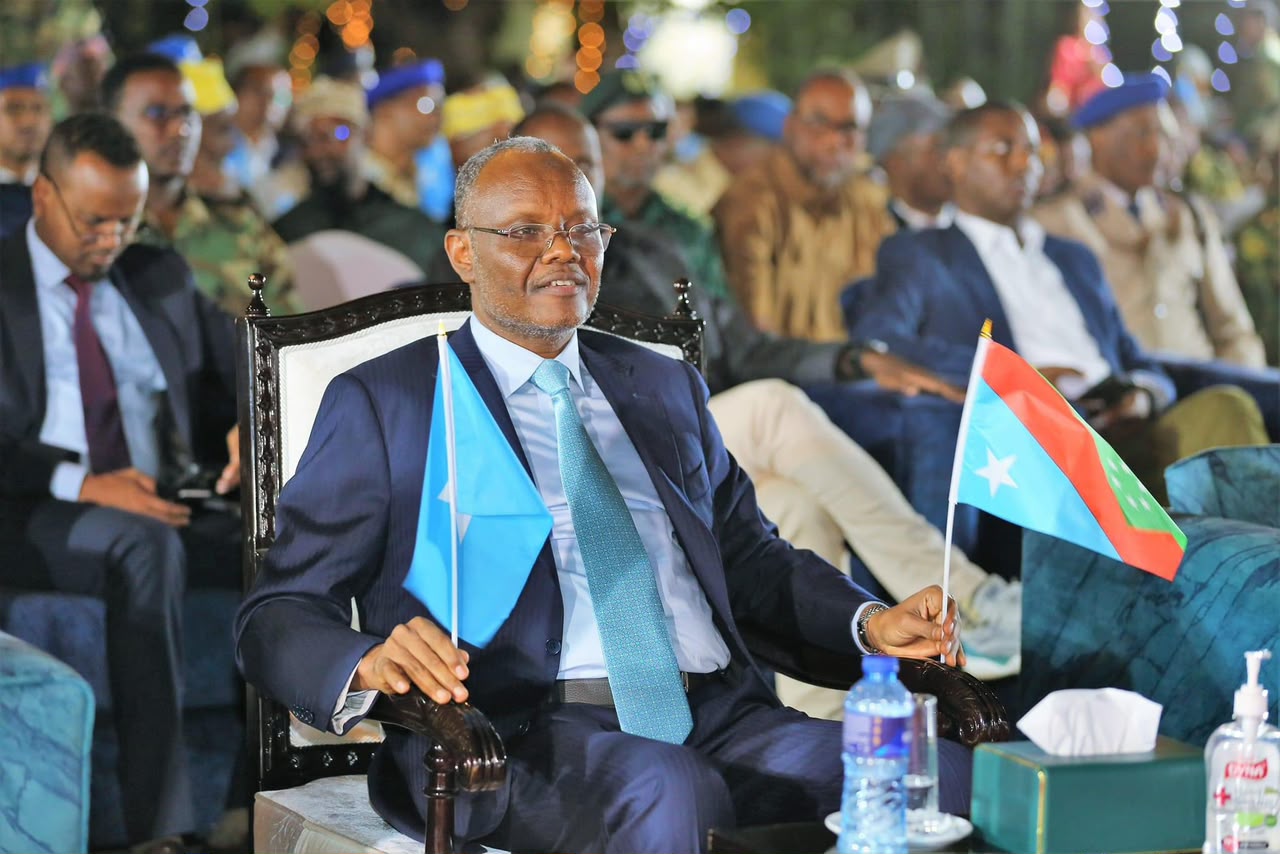
Former Southwest State president Abdiaziz Hassan Mohamed Laftagareen has accused Somali President Hassan Sheikh Mohamud of using military force to undermine his administration, calling on opposition groups and the international community to press for an end to fighting and a negotiated political settlement.
In an open letter dated October 20, Laftagareen’s administration said the people of Southwest State should be allowed to choose their leaders through an agreed electoral process rather than one imposed by force. The letter was addressed to the Somali people, opposition groups, the international community and politicians he described as acting with sound judgment.
Laftagareen said his dispute with Mohamud developed after disagreements over constitutional amendments and the federal government’s proposed electoral arrangements. He accused the president of pursuing changes that would allow him to remain in power indefinitely and said he had repeatedly called for an agreement acceptable to all sides.
According to Laftagareen, the dispute escalated after his mandate expired. He said he called for elections in Southwest State but rejected a proposal under which regional leaders would remain in office until the federal president decided when elections should take place.
He alleged that federal forces were subsequently sent to Baidoa to remove his administration. The dispute culminated in March, when Somalia’s federal forces took control of Baidoa, the regional capital, and Laftagareen resigned. His supporters have continued to challenge the federal government’s authority in the region.
In the letter, Laftagareen also accused Mohamud’s government of using clan politics to pressure Southwest State and alleged that Turkish F-16 fighter jets had supported operations against his forces. He claimed that the aircraft had been used in attacks in Baidoa and that a separate operation in Doolow targeted General Mahad Abdirahman Abdi.
Those allegations have not been independently established. Previous reporting on the dispute has documented accusations by Laftagareen’s camp involving Turkish aircraft, but the circumstances of the alleged strikes and the identities of those responsible remain contested. The claims should not be treated as confirmed findings.
Laftagareen also questioned the federal government’s portrayal of his forces as linked to al-Shabaab, the al-Qaeda-affiliated militant group fighting Somalia’s government. He argued that the authorities had not applied the same approach to al-Shabaab in other areas where the group operates. He further alleged that journalists had faced punishment for reporting on Southwest State and that an altered image had been circulated to associate members of his team with an al-Shabaab leader.
The open letter did not provide independently verifiable evidence for all the allegations it raised. The document reflects the position of Laftagareen’s political camp in a conflict involving rival claims to regional authority, constitutional interpretation and security.
Laftagareen called for an immediate end to military operations, the withdrawal of federal forces from Southwest State and an end to threats against civilians. He also demanded that journalists be allowed to report without intimidation and urged Somali opposition groups to support an inclusive electoral agreement.
He appealed to international partners to press for a return to dialogue and called on Mohamud to step aside, arguing that a negotiated settlement was necessary to prevent the crisis from worsening.
The confrontation reflects a wider dispute over the balance of power between Somalia’s federal government and its federal member states. Disagreements over constitutional changes, election rules and political mandates have strained relations between Mogadishu and regional leaders, while the fighting has added to insecurity in a region already affected by conflict with al-Shabaab.
Whether the latest appeal leads to negotiations remains unclear. Laftagareen’s letter sets out his demands, but a lasting settlement would require agreement among the competing Somali political and security actors and clarity over the electoral process in Southwest State.