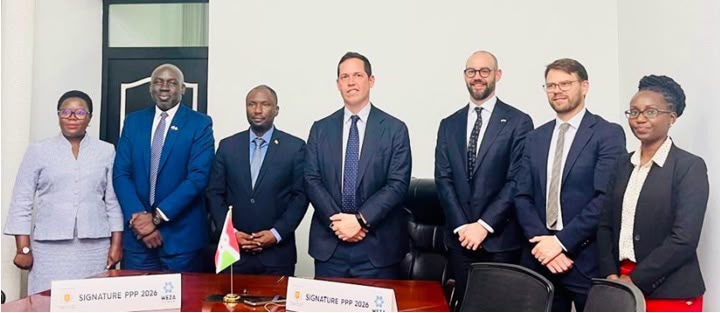
Burundi has signed a $1.4 billion public-private partnership with Anzana Electric Group to expand its electricity distribution network, in a major infrastructure agreement that aims to bring reliable power to millions of people in one of Africa’s least-electrified countries.
The agreement, signed on October 15, was highlighted by the US State Department’s Bureau of African Affairs, which described it as the largest investment in Burundi’s history. The partnership is expected to finance the expansion and modernisation of the country’s electricity grid over several years, with a focus on communities that remain outside the national network.
Under the arrangement, the project will be implemented through Weza Power, a utility established through cooperation between Anzana and the Burundian government. The initiative is designed to extend electricity distribution lines, install transformers, rehabilitate existing infrastructure and connect households and businesses, particularly in rural and underserved areas.
The partners have set ambitious targets for expanding access. The US government’s announcement said the programme aims to raise Burundi’s electrification rate from approximately 12 per cent to 70 per cent. Anzana’s project materials have also described a goal of reaching around nine million people by 2030. Other recent reporting has cited different starting estimates and targets, reflecting differences in the figures used to measure access and the project’s implementation stages. The final number of people connected will depend on how quickly the network is built, and whether households can afford to use the service.
For Burundi, where limited electricity access has constrained businesses, schools, healthcare facilities and agricultural processing, expanding the grid could have effects beyond household lighting. More reliable power can help small enterprises operate for longer hours, allow health facilities to run essential equipment and support the development of industries that depend on electricity.
The partnership is also expected to create employment during construction and network expansion. The US State Department said the project would put thousands of Burundians to work, while arguing that an improved electricity system could attract further private investment in sectors including mining and agricultural processing. The scale of these benefits will depend on the pace of construction, local hiring and whether the new connections deliver affordable and reliable electricity.
The agreement is significant for another reason: it uses a private-sector utility model to expand a national distribution network. Instead of relying exclusively on government financing and implementation, the partnership is intended to mobilise private capital alongside public-sector support. Such arrangements can help governments pursue expensive infrastructure projects, although their success depends on clear contractual obligations, effective oversight and the financial sustainability of the service.
Anzana Electric Group is based in Mauritius and develops power generation and distribution projects across several African countries. It was formerly known as Virunga Power. The company has been involved in Burundi’s energy sector through Weza Power and Songa Energy, which develops hydropower projects. Weza Power’s principal role in the new programme is electricity distribution, meaning the expansion of local networks that carry power to customers rather than the construction of the entire national generation and transmission system.
The US government’s public endorsement also places the agreement within Washington’s wider effort to encourage private-sector investment in African infrastructure and strengthen commercial ties with the continent. The Bureau of African Affairs said a modern electricity grid could create opportunities for additional American business investment and support supply chains connected to mining and agricultural processing.
However, the $1.4 billion headline figure should not be mistaken for a direct US government grant or a single payment from an American company. It represents the wider value of the long-term partnership. Anzana is a Mauritius-based group, and the project’s financing involves a broader investment structure that has included development institutions and other partners. The precise mix of private equity, debt, concessional finance and public support will be important in assessing who bears the financial risks.
The initiative builds on earlier efforts to improve electricity access in Burundi. The World Bank Group’s Multilateral Investment Guarantee Agency has supported the development of Weza Power through an investment guarantee, while the African Development Bank and other partners have backed wider efforts to expand the country’s energy infrastructure. These efforts reflect the scale of the challenge: extending a grid across rural communities requires substantial spending on lines, transformers, connections, maintenance and the systems needed to keep the electricity supply reliable.
Even with the investment, the targets will not be achieved simply by signing the agreement. Construction must progress across the intended areas, new connections must be completed, and electricity must remain affordable for households and businesses. The project will also need to coordinate distribution expansion with sufficient power supply, since a larger network alone cannot guarantee that customers receive reliable electricity.