Physical Address
Delta Corner Tower,
Waiyaki Way, Westlands, Nairobi, Kenya.
Contact us:
Email: info@todaysw.com
Physical Address
Delta Corner Tower,
Waiyaki Way, Westlands, Nairobi, Kenya.
Contact us:
Email: info@todaysw.com
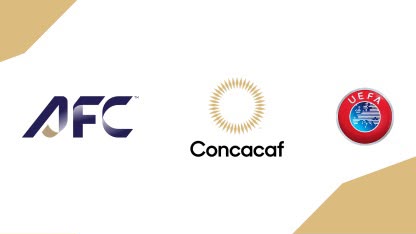
The dispute between FIFA and some of the world’s most powerful football confederations has turned more serious, with the Asian Football Confederation (AFC), Concacaf and UEFA issuing a joint letter accusing FIFA’s leadership of a fundamental failure of judgement and a breach of trust.
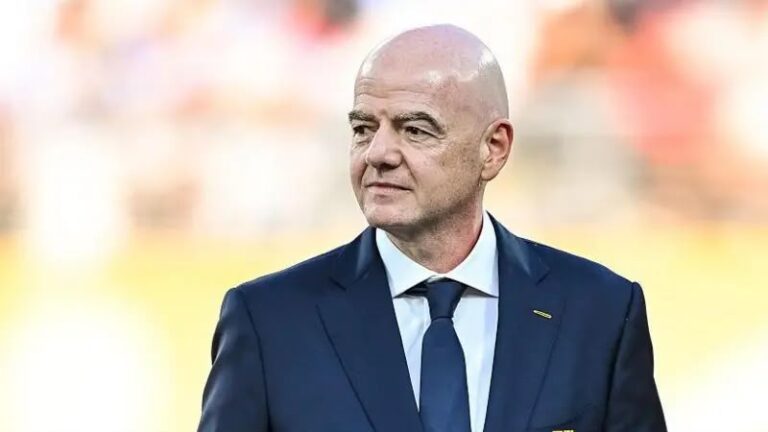
The letter, signed by AFC President Salman bin Ibrahim Al Khalifa, Concacaf President Victor Montagliani and UEFA President Aleksander Čeferin, together with the three confederations’ general secretaries, represents the strongest collective challenge yet to FIFA President Gianni Infantino following the controversy surrounding the proposed private investment in the FIFA World Cup.
The three confederations said football belongs to its players, supporters, clubs, member associations and institutions responsible for protecting its future, rather than to any individual or organisation.
Their intervention follows separate correspondence from the confederations over FIFA’s proposed plan to create FIFA Forward Enterprise and sell interests in the World Cup to private investors.
FIFA subsequently defended Infantino, saying he was democratically elected by its 211 member associations and continues to serve with their mandate. The organisation also accused unnamed critics of attempting to undermine its president through allegations, insinuations and misinformation.
AFC, Concacaf and UEFA rejected the suggestion that their opposition was motivated by money or disagreements over the distribution of World Cup resources.
“The Confederations have already called for the responsible distribution of FIFA’s vast existing reserves to further strengthen investment in the development of Member Associations,” they said.
Instead, they argued that the dispute concerns something more fundamental: the integrity of football’s governance and the responsibility of those elected to lead the sport.
The confederations said leadership should be regarded as a duty to serve the football family rather than as a possession or an opportunity to accumulate power.
They accused FIFA’s leadership of abandoning that duty when trust is broken, and an individual places himself above the collective that gave him authority.
One of the sharpest parts of the letter was directed at FIFA’s explanation that the controversy resulted from mistakes in the process.
The three confederations said FIFA’s recent communication to its vice-presidents and 211 member associations appeared to frame the episode as a failure of communication.
According to the confederations, the proposal was advanced on a compressed timetable, without meaningful consultation and with a deadline that did not allow member associations sufficient time to properly examine its terms.
They argued that this was not simply an oversight but a process designed to limit scrutiny.
The confederations also said FIFA had failed to acknowledge what they consider the more serious problem: that attempting to sell an interest in the FIFA World Cup was itself a serious error of judgement and a breach of trust with the organisations FIFA is supposed to serve.
The three confederations also rejected FIFA’s plan to present a report on the episode to the FIFA Council.
They argued that a matter involving such serious governance concerns should instead be examined by a fully independent third party.
The letter specifically said FIFA administration, its staff and other stakeholders within football should have no role in conducting the review.
The confederations also reiterated their demand that all relevant documents and records be preserved, following UEFA’s earlier communication on the preservation of documents.
The letter also raised concerns about a recent FIFA leadership meeting in Morocco.
According to the confederations, FIFA’s own communication confirmed that only one elected official attended the leadership meeting, while FIFA Council members and member associations were not invited.
Instead, the meeting involved FIFA-employed senior management staff.
The confederations argued that the decision to summon selected members of FIFA’s management committee abroad, rather than having the organisation’s leadership return to its headquarters in Zurich, reinforced the concerns that had already emerged around the governance of the World Cup investment proposal.
They described the conduct as inconsistent with the responsibilities of a custodian of world football.
“There is silence where there should be accountability, distance where there should be openness,” the confederations said.
The joint intervention of AFC, Concacaf and UEFA represents a substantial portion of FIFA’s global football family and has now chosen to speak with one voice on the governance dispute.
It also comes after FIFA publicly defended Infantino and rejected attempts to question his democratic mandate.
The three confederations, however, insisted that their position was not an attempt to overturn decisions that had already been collectively reached, including World Cup allocations, competition expansion and the distribution of development resources.
Their argument is that those decisions were collective achievements and should remain intact.
What they are challenging is the manner in which FIFA is being governed.
The confederations concluded by calling for football’s unity to be preserved, but made clear that such unity must be built around leadership that serves the sport rather than seeks to command it.
The latest letter therefore turns the dispute from a disagreement over a cancelled investment proposal into a broader confrontation over trust, accountability and the future governance of world football.