


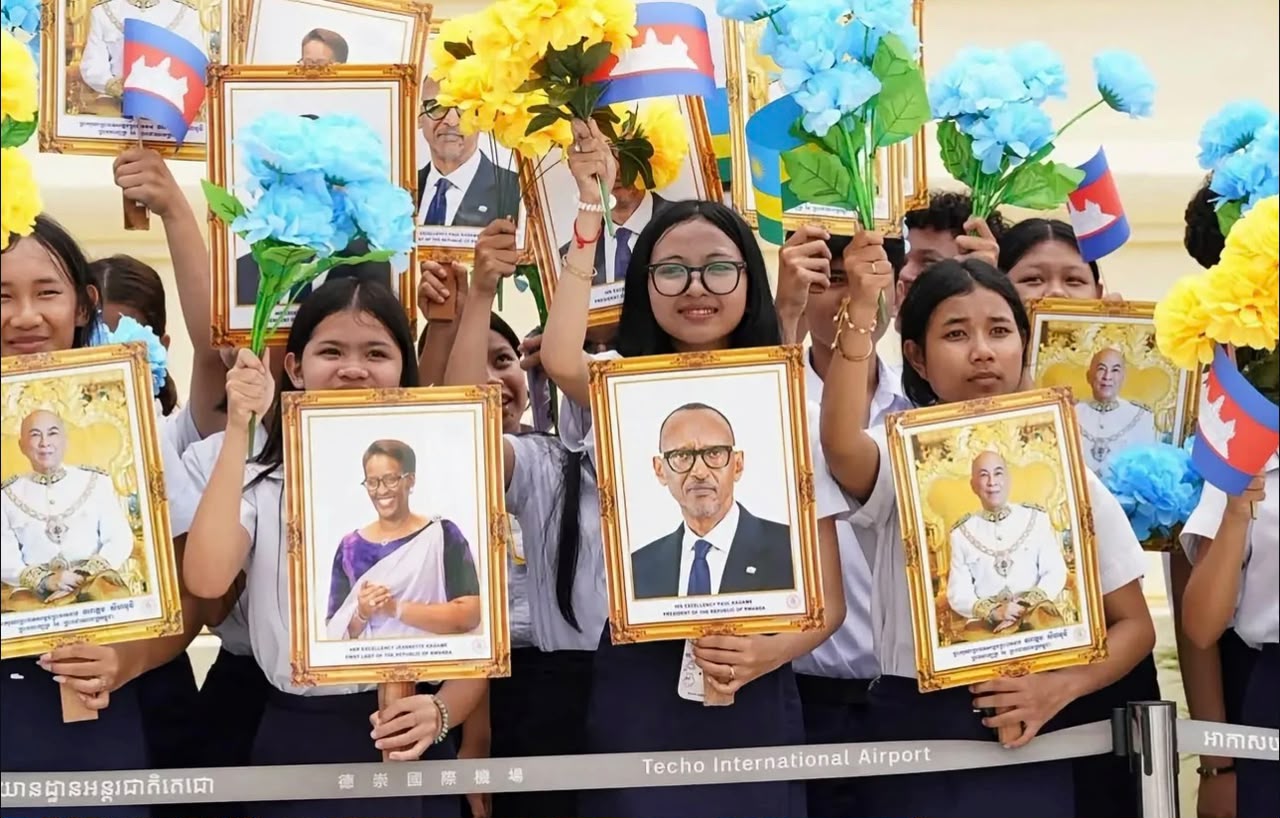
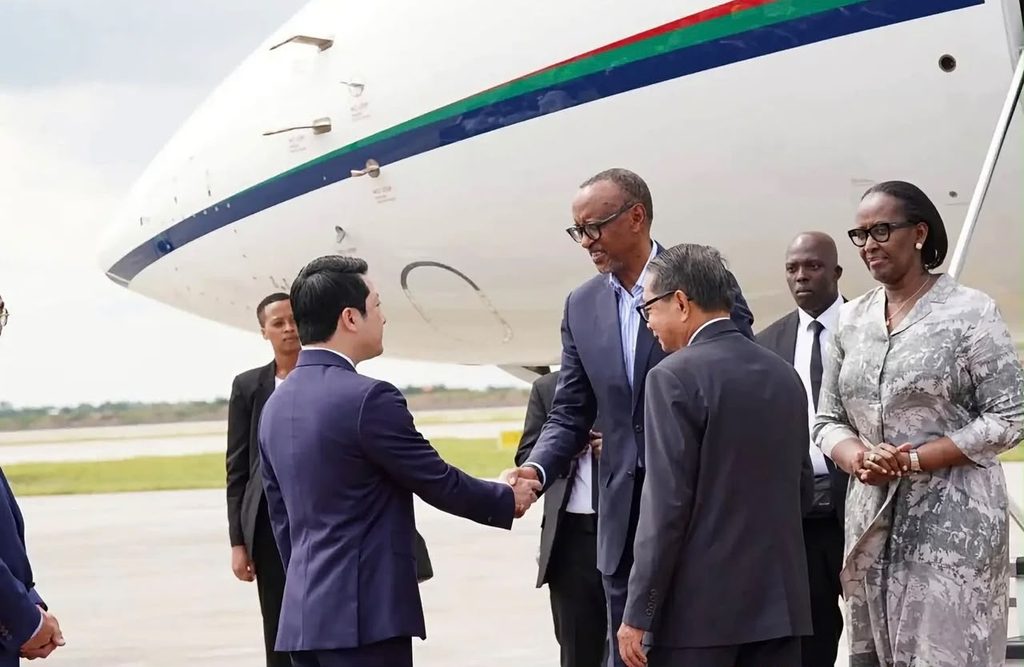
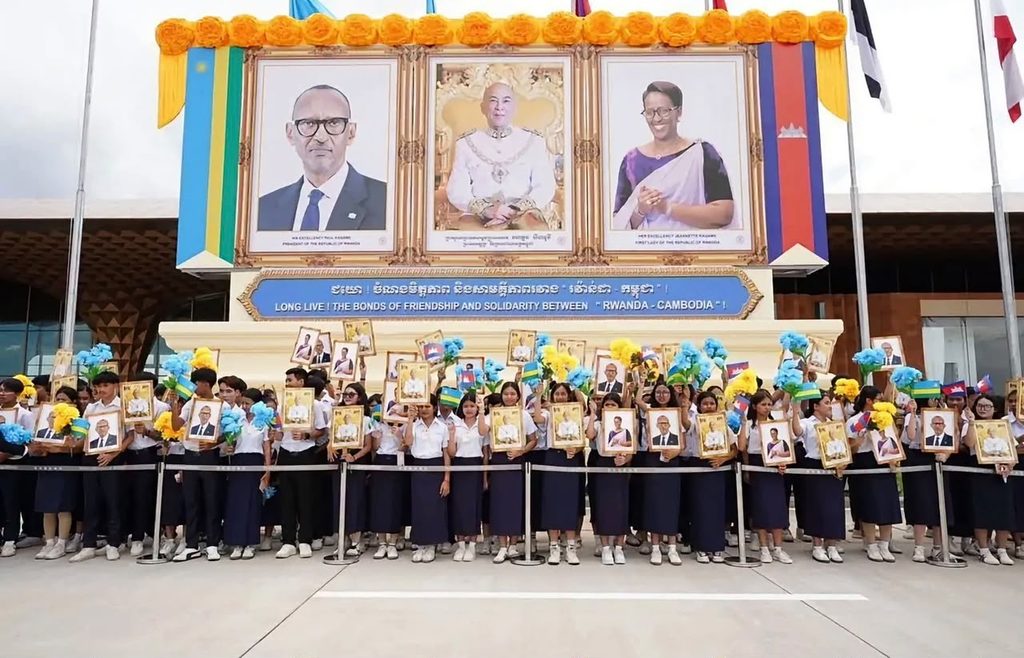
Rwandan President Paul Kagame and First Lady Jeannette Kagame have arrived in Phnom Penh, Cambodia, ahead of the 20th Summit of the International Organization of La Francophonie (OIF), where a closely watched leadership election is expected to bring the diplomatic differences between Rwanda and the Democratic Republic of Congo into focus.
The summit, scheduled for November 14–16, comes as Rwanda’s incumbent Secretary-General, Louise Mushikiwabo, seeks a third term against a challenge from Juliana Amato Lumumba, the candidate backed by the Democratic Republic of Congo. Mauritania’s Coumba Ba and former Romanian Prime Minister Dacian Cioloș are also contesting the position.
The election is expected to take place on November 16, when leaders of the OIF’s 53 full member states and governments will select the organisation’s Secretary-General for the 2027–2030 term.
Mushikiwabo has led the organization since 2018 and was re-elected in 2022. Rwanda has formally backed her bid for another four-year term, with Kigali pointing to her experience and work in leading the organisation.
Her candidacy, however, faces strong opposition from Kinshasa, which is supporting Lumumba, a former Congolese culture minister and daughter of Patrice Lumumba, the country’s first prime minister and a prominent figure in Africa’s independence history.
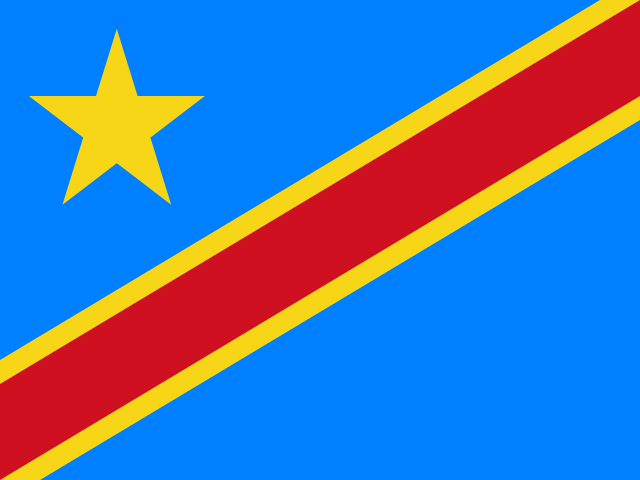
The contest has taken on wider political significance because of the strained relationship between Rwanda and the DRC, particularly over the conflict in eastern Congo. Kinshasa has repeatedly accused Rwanda of supporting the M23 armed group, an allegation backed by findings from UN experts but rejected by Kigali.
Congolese officials have argued that Mushikiwabo’s re-election would be difficult to reconcile with the principles and values the organisation is expected to uphold. The DRC has also indicated that it could reconsider its membership if she secures another term, raising concerns about the possible consequences for the organisation.
Rwanda, meanwhile, has defended Mushikiwabo’s record and rejected attempts to turn the leadership contest into a judgment on its bilateral relationship with the DRC.
The four candidates represent different proposals for the organisation’s future. Mushikiwabo is campaigning on her record in office, while Lumumba has presented a programme focused on making the Francophonie more people-centred, strengthening cultural and linguistic diversity, and expanding access to digital knowledge. Ba is presenting herself as an African alternative, while Cioloș has called for a more practical organisation with stronger economic opportunities for French speakers.
The selection process has also attracted attention because of changes to the organisation’s rules. Although the Secretary-General has traditionally been selected through consensus, a procedure adopted in 2022 allows a simple-majority vote if consensus cannot be reached.
The election will therefore test not only the candidates’ support among member states but also the organization’s ability to manage a contest carrying significant diplomatic implications.
The OIF brings together 90 states and governments, including 53 full members, five associate members and 32 observers. Its work covers cooperation in areas such as education, culture, democracy, human rights and economic development, with French serving as a shared link among its members.
This year’s summit is being held under the theme “Reinvest in Peace for Shared Prosperity and Lasting Stability.” Cambodia’s hosting of the gathering is also a historic first for the country.
Kagame’s arrival places Rwanda at the centre of the high-level diplomatic discussions taking place in Phnom Penh. Beyond the summit’s broader agenda, the leadership vote will be closely watched across Africa, particularly in the Great Lakes region, where the outcome could affect relations between Kigali, Kinshasa and other Francophonie member states.
The decision on November 16 will determine who leads the organisation for the next four years, but it will also reveal how its members navigate a leadership contest shaped by competing national interests and wider regional tensions.


Comments0 ShowHide