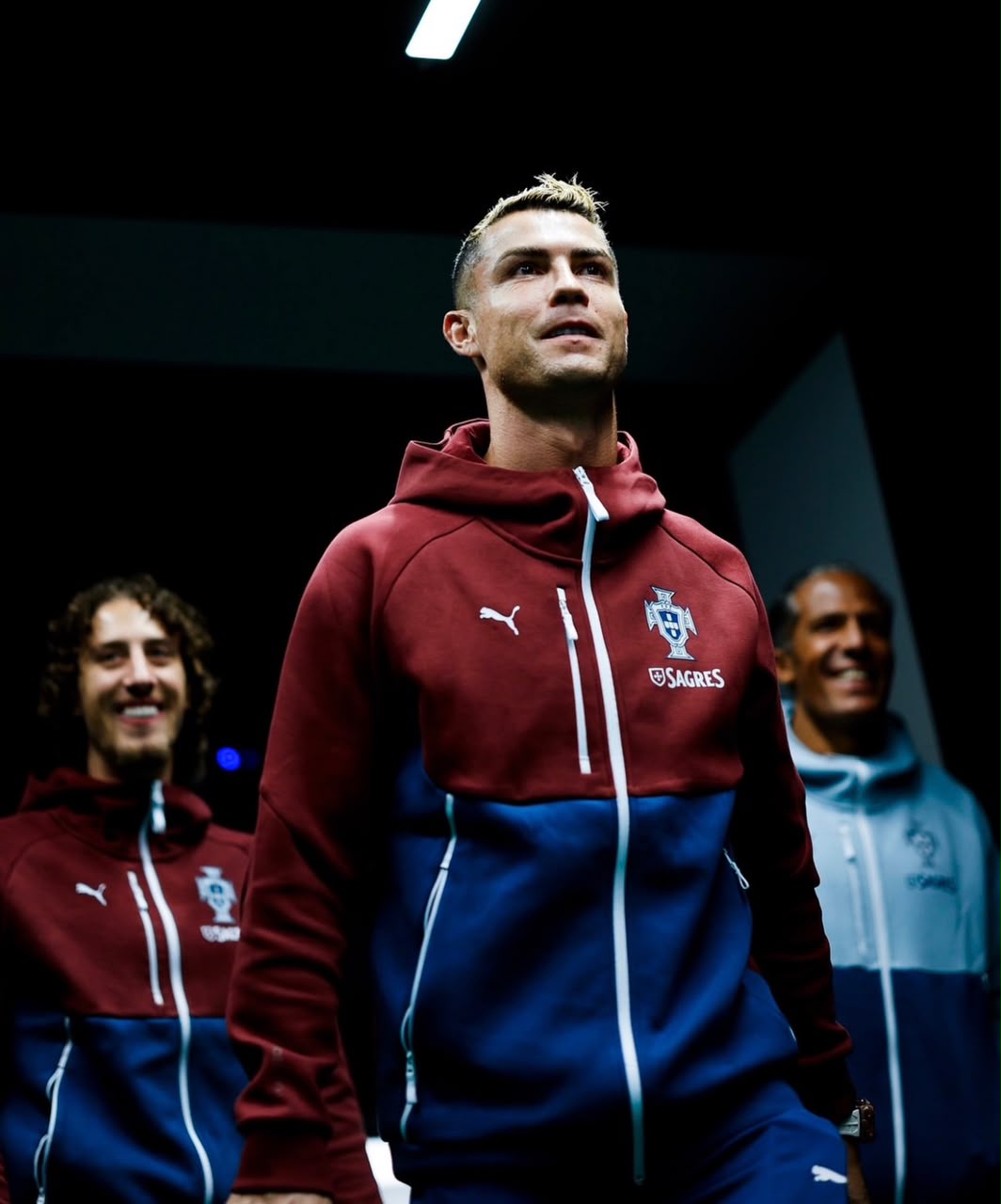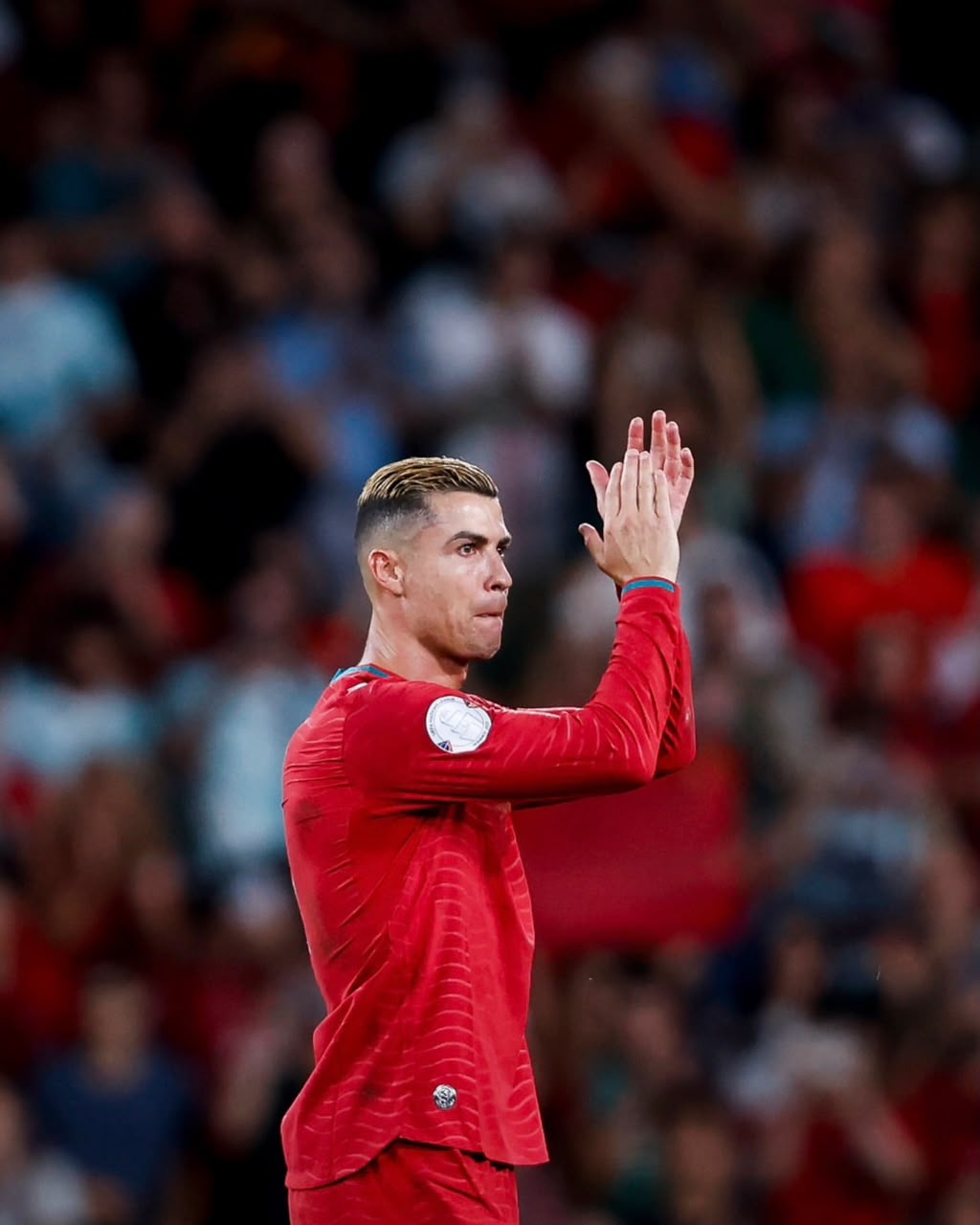
Cristiano Ronaldo has finally explained why he abruptly left Portugal’s national team camp last week, accusing head coach Jorge Jesus of breaking his word twice and saying the loss of trust ultimately convinced him that his continued presence would harm the squad.
In a lengthy statement published on Tuesday, October 6, Ronaldo gave a first-person account of the events surrounding his departure from the camp in Denmark, fulfilling a promise he made when he left on September 30. He also apologised to Portugal’s supporters and his teammates for walking out, accepted that he should face disciplinary action and insisted that he has not abandoned the national team.
Ronaldo said the roots of the dispute go back to the period immediately after the 2026 World Cup. He revealed that he had already prepared a letter to the Portuguese people for the day he eventually leaves international football for good. However, on the flight back from the United States, Portuguese Football Federation president Pedro Proença asked him to reconsider his decision to leave the national team because the federation wanted him to continue.
According to Ronaldo, Proença then asked for his opinion on the identity of the next head coach. Ronaldo said he was given several names but was not told who else was being considered. He backed Jorge Jesus as the right choice and said he was genuinely pleased when Jesus was eventually appointed.
“It was the right option,” Ronaldo said of the appointment, adding that subsequent results had confirmed his view.
A few days later, Ronaldo said Jesus contacted him and asked to meet in person at Cidade do Futebol, where Al Nassr were holding their pre-season camp. During that meeting, Ronaldo said Jesus told him that he was central to his plans and presented him with a specific programme for his involvement with Portugal.
Ronaldo said Jesus told him he would play the first and final matches of the international camp, while substitutions would generally be managed to protect his physical condition. Jesus also proposed that Ronaldo should not travel with the squad for the matches in Norway and Denmark.
The plan, according to Ronaldo, was for him to play the first match, remain in Portugal while the team travelled, and then rejoin the squad before Portugal’s match at the Estádio do Dragão.
Ronaldo said he immediately rejected that proposal.
Although remaining in Portugal would have reduced his workload, he argued that he could not accept the privilege while continuing to serve as captain of the national team.
He said Jesus accepted his position.
The two later met again at Ronaldo’s home in Lisbon on the eve of the national team’s camp. Ronaldo said their conversation was calm and that the principles agreed in August remained in place.
He then played Portugal’s match at Alvalade and was substituted without any problem. Ronaldo said he left the match believing that his role in the camp remained clear and that there was no indication that his international future was about to become the subject of a major dispute.
The situation changed on the day of Portugal’s match against Norway.
Ronaldo said an assistant approached him while he was having lunch and told him that Jesus wanted to speak with him. According to Ronaldo, the coach unexpectedly asked whether he was prepared to play for around 30 minutes against Norway.
That request was outside the physical recovery and training plan they had previously agreed, because Ronaldo believed he was only scheduled to play the fourth match of the camp in Porto.
He nevertheless accepted.
Jesus told him to be ready because he would play 30 minutes.
Ronaldo said he subsequently warmed up from half-time, expecting to enter the match, but the minutes passed without him being called.
He never played.
“The coach had failed to keep his word,” Ronaldo said.
Portugal won the match, but Ronaldo said that at the final whistle he wanted only to leave and be alone. He did not go over to greet the supporters.
He accepted full responsibility for that decision and apologised to the Portuguese fans who had supported the team in Norway, as well as supporters from other countries who had travelled specifically to see him.
Forty-eight hours later, Ronaldo said he, Jesus and Simão Coutinho, Al Nassr’s sporting director, held a detailed meeting. Ronaldo said Coutinho was involved because he had been present during earlier conversations between the player and coach.
According to Ronaldo, they agreed that the only way to settle the issue was for Jesus to repeat publicly what he had told Ronaldo privately.
Ronaldo said the agreement was that Jesus would begin his next press conference by explaining that Ronaldo had never demanded playing time; that Jesus himself, and nobody else, had proposed the plan for the camp; and that it had been a mistake to make Ronaldo warm up without subsequently putting him on the pitch.
Ronaldo said Jesus also promised that he would not repeat the mistake.
The player said the meeting ended with Jesus asking him for a hug and promising that the matter would be put behind them. Ronaldo said he would not play in Denmark but would play in Portugal’s next match at the Dragão.
A video conference involving Jesus, Coutinho and Tiago Craveiro was subsequently held at the coach’s request, Ronaldo said, and the details of their discussion were summarised in a short document.
Ronaldo said he personally validated the notes before they were delivered to Jesus.
He then described the subsequent press conference as the second major breach of trust.
According to Ronaldo, Jesus’ public tone was completely different from the private conversation they had held the previous day. Ronaldo said he heard expressions and an attitude that he believed he had not deserved and that Jesus had never displayed towards him privately.
The notes Ronaldo said he had validated included eight points. Among them, Jesus was recorded as saying that he alone had proposed Ronaldo’s plan for the season, that he knew how much Ronaldo cared about Portugal, that the plan had been accepted, and that Ronaldo had never questioned his decisions and had behaved in an exemplary and professional manner.
The notes also stated that the Norway match had not originally been part of Ronaldo’s planned schedule, but that Jesus believed Ronaldo had recovered physically from the previous game and warned him that he might use him. Ronaldo agreed.
The most striking admission in the notes concerned the warm-up.
Jesus was recorded as saying he had made a mistake by having a player of Ronaldo’s stature warm up and then not putting him into the match.
He compared the situation to having a player of the stature of Pelé or Diego Maradona warm up and then leaving him on the bench, saying he would not make the same mistake again.
Jesus was also recorded as saying that he wanted Ronaldo in the national team and, in Ronaldo’s account, that he wanted him there “a lot”.
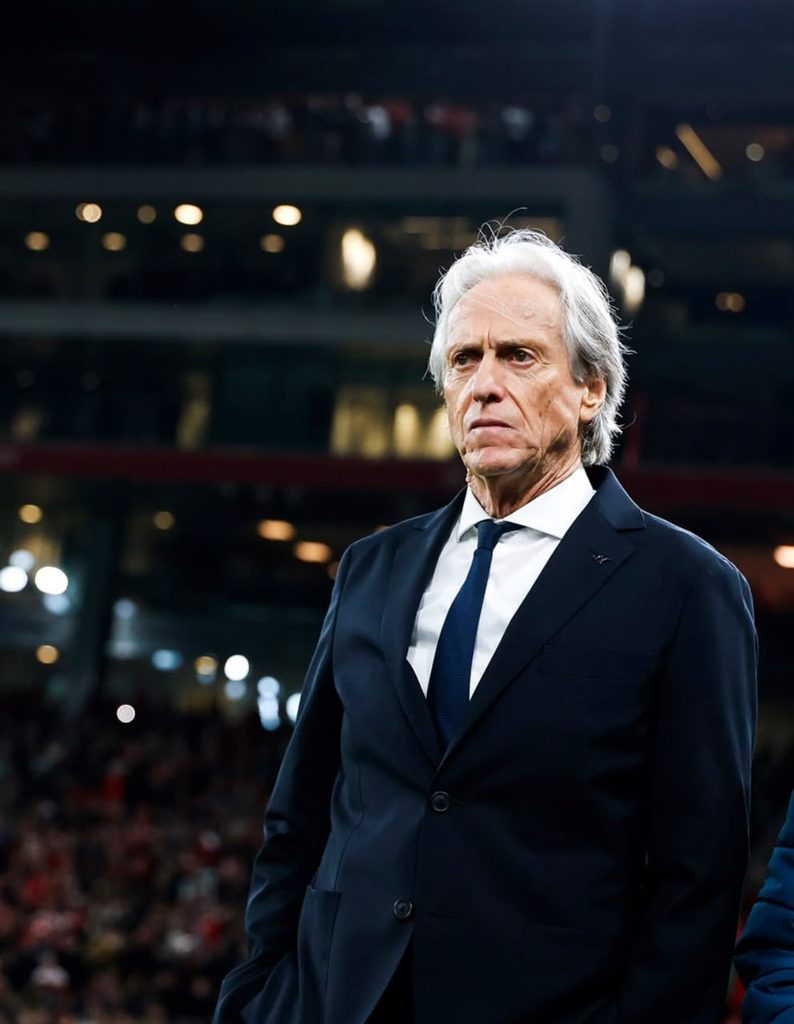
On Ronaldo’s failure to greet supporters after the Norway match, the notes reportedly stated that a player with more than 230 Portugal appearances did not need to be taught about love for the country. Jesus was also recorded as saying the incident was simply a moment of frustration and did not erase Ronaldo’s longstanding relationship with the supporters.
But Ronaldo said none of those notes required Jesus to apologise to him.
Instead, he viewed the episode as the second time the coach had failed to keep his word.
That was the point at which Ronaldo decided to leave the camp.
He said that before doing so, he had another conversation with Proença and Jesus on the morning of the press conference. Ronaldo said he told both men that if they no longer wanted him in the national team, they simply needed to tell him honestly.
He said he would have accepted the decision and even offered to help prepare a positive farewell.
According to Ronaldo, both men rejected that possibility and told him that his place remained with the national team.
Ronaldo also rejected any suggestion that he had attempted to interfere with Jesus’ technical or tactical authority.
He said that during almost 25 years of international football, he had never interfered in the technical or tactical decisions of a coach or national-team manager.
“I respect the decision,” he said, arguing that his problem was not being asked to accept a decision but having promises made to him and then broken.
Ronaldo nevertheless accepted that leaving the camp was wrong.
He apologised to his teammates and said that, regardless of what had happened between him and Jesus, he should not have abandoned the squad.
“The responsibility is entirely mine,” he said.
He also accepted that the Portuguese Football Federation should assess and punish his actions.
Ronaldo went further, saying he did not believe his status should protect him from punishment. As captain, he argued, his position actually made his conduct more serious.
He said football’s rules should apply equally to everyone.
The 41-year-old also addressed speculation that his departure meant the end of his international career.
Ronaldo said he had heard talk of the federation giving him a formal farewell and organising farewell matches.
He welcomed the possibility of one or more farewell games at some point, but made clear that he does not currently see his role with Portugal as a ceremonial one.
He wants to compete.
Ronaldo recalled that when he was informed of his father’s death while he was with the national team, he chose to remain with Portugal until the following day’s match had been completed. He said he had done something for his country that he would never have done for a club.
His position now, he said, remains the same.
If he is physically fit, playing for his club and scoring goals, and after serving whatever suspension the Portuguese Football Federation imposes, Ronaldo said he will remain available for Portugal.
“I will be available, as I have always been until today, to compete and win for our national team,” he said.
The statement directly contradicts the impression created when Ronaldo first left the camp that his international career might be over. At the time, Ronaldo had simply said that he had left following Jesus’ press conference and a conversation with the FPF president and promised to tell the Portuguese people the truth “in due course.”
Jesus has since publicly said Ronaldo remains eligible to return if he wants to, and after Portugal’s 2-1 victory over Norway on October 4, the coach again said the door was open. Jesus has also rejected the idea that there was a major dispute, saying that for him the episode was not a “case” and that his authority as coach remained non-negotiable.
Ronaldo’s account therefore presents a much more detailed version of the dispute: he says the disagreement was not simply about being left on the bench, but about an agreed plan, an unexpected decision to use him against Norway, a promise to explain that decision publicly, and what he regarded as a second broken promise.
Portugal have continued without him, winning 4-2 away to Denmark and then 2-1 against Norway. UEFA’s official results show Portugal currently top Group A4 with four wins from four matches.
But Ronaldo has made his position clear.
He says he is prepared to accept punishment, accepts responsibility for walking away, remains open to a future farewell and, most importantly, still wants to play for Portugal.
He ended his statement with a simple declaration:
“This is, believe me, the purest of truths.”