


Kenya and Germany have agreed to expand employment opportunities for Kenyans seeking work in Europe, with President William Ruto announcing new measures to simplify recruitment procedures, improve German language training and accelerate the recognition of professional qualifications.
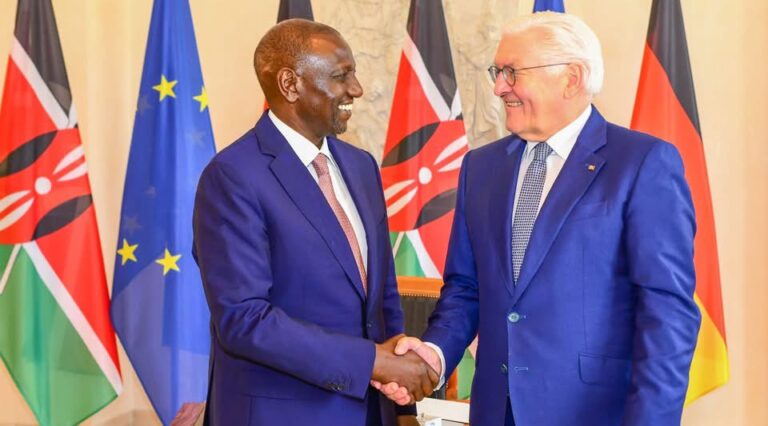
The announcement followed bilateral talks between Ruto and German President Frank-Walter Steinmeier at State House in Nairobi on Wednesday, November 25, 2026, during Steinmeier’s official visit to Kenya.
According to Ruto, the number of Kenyans employed in Germany increased from 7,170 in March 2024 to 9,500 in March 2026, reflecting progress under the two countries’ overseas employment partnership. The number of Kenyan trainees contributing to Germany’s social security system also increased from 820 to 1,260 over the same period.
The two governments intend to build on that progress by addressing some of the barriers facing Kenyans seeking employment in Germany, particularly visa processing, recruitment procedures, language requirements and the recognition of professional qualifications.
A key development during the visit was the signing of a Memorandum of Understanding between Kenya and telc, a German language examination and certification institution. The agreement is intended to expand access to internationally recognized German language examinations and certification within Kenya, allowing prospective workers to prepare for opportunities in the German labour market without having to travel abroad for the examinations.
The cooperation will also involve the introduction of German language learning materials, vocational training resources and support for institutions involved in language education. It is expected to include teacher development and efforts to improve the quality and accessibility of German language training.
The agreement comes as Germany continues to seek skilled workers in several sectors of its economy, while Kenya is looking to expand overseas employment pathways for its growing workforce. However, the new certification arrangement does not automatically guarantee employment or visas; applicants will still need to satisfy the relevant professional, language and immigration requirements.
Beyond employment, the discussions covered investment, trade, agriculture, technology and development cooperation. Ruto welcomed Germany’s commitment of €52.5 million, approximately KSh7.8 billion, in development cooperation funding for Kenya between 2026 and 2028, following intergovernmental negotiations held in Berlin in June 2026.
The funding builds on Germany’s existing development partnership with Kenya, particularly in renewable energy, agriculture, water and sanitation, infrastructure and technical and vocational education.
Ruto also invited German companies to increase investment in Kenya, identifying manufacturing, agro-processing, healthcare, infrastructure, renewable energy and digital technology as priority areas. More than 120 German companies already operate in Kenya, providing an existing foundation for expanded business partnerships, joint ventures and local manufacturing.
The two countries also discussed opportunities to expand Kenyan exports to Germany and other European markets, including cut flowers, avocados and fresh vegetables. Cooperation in agricultural mechanization, irrigation, climate-smart farming and cold-chain infrastructure was also highlighted as an opportunity to improve productivity and strengthen food security.
Digital cooperation featured in the discussions, with both governments exploring collaboration in artificial intelligence, cybersecurity, digital public infrastructure and scientific research. Ruto also pointed to opportunities in geothermal energy, green hydrogen and energy storage, areas where German technology and investment could support Kenya’s renewable energy ambitions.
The talks further addressed maritime cooperation, including opportunities for Kenyan seafarers through specialized training, sea-time placements and partnerships with German shipping companies. Both countries also discussed maritime logistics and the modernization of port infrastructure.
Steinmeier’s visit comes as Kenya and Germany seek to move their relationship beyond its traditional development cooperation framework towards greater trade, private-sector investment, technology transfer and employment opportunities.
The two countries have maintained diplomatic relations for more than six decades, with Germany remaining one of Kenya’s established development and economic partners.
Steinmeier arrived in Kenya on November 24 as part of a five-day African tour that also included Côte d’Ivoire and Ghana. His Kenyan programme included meetings with government officials and visits to institutions involved in healthcare, digital services, vocational development and cultural activities.
For Kenya, the latest agreements offer an opportunity to connect its workforce with Germany’s demand for skilled labour while attracting investment and expanding access to European markets. Whether these commitments translate into more accessible recruitment pathways and lasting employment opportunities will depend on their implementation by both governments.



Comments0 ShowHide