Skip to content
SWAHILI TODAY
Grab Your E-Paper Weekly Edition (Free)9 - 15 Nov 2026Grab yours, free to read and download
Read onlineDownload PDF
UAE

UAE

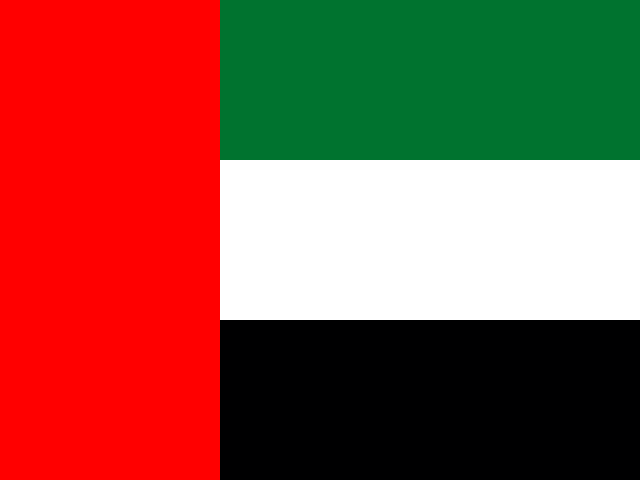
The United Arab Emirates (UAE) is a sovereign federation of seven absolute monarchies located at the southeastern corner of the Arabian Peninsula. Founded in 1971 following the withdrawal of British protectorate treaties, the UAE transformed within five decades from a pearl-diving and maritime trading territory into a global financial, aviation, logistics, and artificial intelligence powerhouse. Anchored by Abu Dhabi’s vast hydrocarbon reserves and sovereign wealth funds alongside Dubai’s dominance in international commerce, tourism, and port infrastructure (DP World), the UAE exercises outsized geopolitical influence across the Middle East, the Horn of Africa, and global energy markets.

Quick facts about UAE

  1. It is a federation of seven hereditary emirates: Abu Dhabi, Dubai, Sharjah, Ajman, Umm Al Quwain, Ras Al Khaimah, and Fujairah, situated on the southeastern tip of the Arabian Peninsula along the Persian Gulf and Gulf of Oman, with a population exceeding 10.5 million (where expatriates account for nearly 90% of all residents).
  2. It achieved formal independence from the British protectorate system (known as the Trucial States) on December 2, 1971, when six emirates united under founding president Sheikh Zayed bin Sultan Al Nahyan, before Ras Al Khaimah joined as the seventh emirate on February 10, 1972.
  3. Sheikh Mohamed bin Zayed Al Nahyan (MBZ), serves as the 3rd President of the UAE and Ruler of Abu Dhabi since May 2022, governing alongside Vice President, Prime Minister, and Ruler of Dubai Sheikh Mohammed bin Rashid Al Maktoum.
  4. It holds roughly 98 billion barrels of proven crude oil reserves (ranking 6th globally, with over 95% concentrated in Abu Dhabi) alongside massive sovereign wealth funds, including the Abu Dhabi Investment Authority (ADIA), Mubadala, and ADQ; managing well over $1.7 trillion in combined state assets.
  5. It diversified its economy aggressively away from hydrocarbons so that non-oil sectors generate nearly 80% of real GDP, enabling the Middle East's second-largest economy to withstand the 2026 U.S.–Iran war and Strait of Hormuz maritime disruptions with positive growth (upgraded by the IMF in November 2026) and a Fitch AA- credit rating.
  6. It constructed the world's tallest skyscraper, the 828-meter (2,717-foot) Burj Khalifa in Dubai, alongside the Habshan–Fujairah crude oil pipeline, a strategic bypass transporting up to 1.8 million barrels per day directly to the Gulf of Oman to circumvent Strait of Hormuz blockades.
  7. They became the first Arab nation to operate a commercial nuclear power plant (Barakah Nuclear Energy Plant, supplying 25% of national electricity) and the first Arab state to send an interplanetary probe to Mars (Hope Probe, entering Martian orbit in February 2021).
  8. They triggered intense international scrutiny and geopolitical friction over aggressive foreign interventions, including the 2020 Abraham Accords normalization with Israel, ongoing regional rivalry with Saudi Arabia in Yemen, and widespread UN and international accusations of supplying arms and logistical backing to the Rapid Support Forces (RSF) in Sudan's civil war, alongside historic gold-laundering exposure in the 2023 Al Jazeera "Gold Mafia" investigation.

News about UAE

ADVERTISEMENT