Physical Address
Delta Corner Tower,
Waiyaki Way, Westlands, Nairobi, Kenya.
Contact us:
Email: info@todaysw.com
Physical Address
Delta Corner Tower,
Waiyaki Way, Westlands, Nairobi, Kenya.
Contact us:
Email: info@todaysw.com

Uganda is considering a phased relocation of key government functions from Kampala to Nakasongola, with supporters arguing that a new administrative city could ease congestion and allow better planning.
The proposal to move Uganda’s administrative capital away from Kampala has returned to the national debate, with Nakasongola District emerging as the preferred location for a possible new political and administrative centre.
The proposal is not an immediate decision to abandon Kampala. Instead, the government is considering a gradual transition that could run until 2040, with selected ministries and government agencies potentially moved in phases.
State Minister for Urban Development Margaret Muhanga presented the proposal to Parliament, where lawmakers have called for further studies before the government commits to the project.
President Yoweri Museveni has reportedly expressed support for the idea, although the proposal remains under discussion and has faced questions over its cost, practicality and timing.
One of the main arguments is the pressure on Kampala. Uganda’s capital has experienced rapid population growth, heavy traffic, overcrowding and unplanned development, creating problems for both residents and government institutions.
Uganda’s National Planning Authority has estimated that traffic congestion costs the economy about four percent of gross domestic product each year. The authority has also warned that reorganising Kampala will be difficult because of decades of development without adequate physical planning.
Supporters of decentralisation argue that moving political and administrative functions could reduce some of the pressure on Kampala while allowing the city to concentrate more heavily on its role as Uganda’s commercial and business centre.
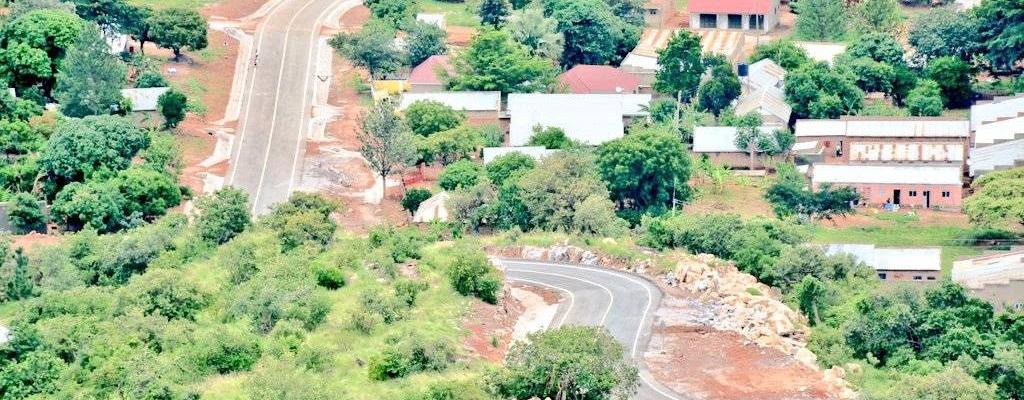
Unlike Kampala, which is already densely developed, Nakasongola has large areas of land where a new city could theoretically be planned from the beginning. Roads, government offices, housing, Parliament, courts and other public institutions could be designed as part of a coordinated urban plan rather than added to an already crowded city.
The idea is not entirely new. In December 2024, several Members of Parliament backed the relocation of key government functions to Nakasongola as part of discussions on how to decongest Kampala. MP John Musila suggested moving Parliament and other political functions to a new city, arguing that this could create jobs and stimulate development outside Kampala. Another MP, Alfred Edakasi, supported a gradual approach in which Kampala would remain an economic centre while political functions were developed elsewhere.
Nakasongola has also previously been proposed as a potential location for a new capital because of its central position and relatively undeveloped land. A 2022 proposal argued that the district’s location, available space and security could make it suitable for a purpose-built capital.
Critics argue that Uganda should first fix Kampala rather than spend large amounts of public money creating another administrative city. They question whether relocating ministries and other institutions would actually solve the country’s urban problems or simply transfer them elsewhere.
There is also a question of whether the government can afford such a project. Uganda is already facing pressure on public finances, while Parliament has previously raised concerns about funding shortages affecting essential sectors.
The Kampala Capital City Authority, meanwhile, has its own five-year strategic plan valued at Sh11.9 trillion aimed at transforming Kampala into a more functional, inclusive and resilient city.
That has raised a broader question: should Uganda spend heavily on improving the capital it already has, or invest in a new administrative centre designed around the needs of a modern state?
Kampala would not cease to exist as Uganda’s main commercial hub even if the administrative functions were moved. The proposed model would instead separate the country’s political and administrative centre from its principal business centre, similar to arrangements seen in countries where government and commercial functions are concentrated in different cities.