


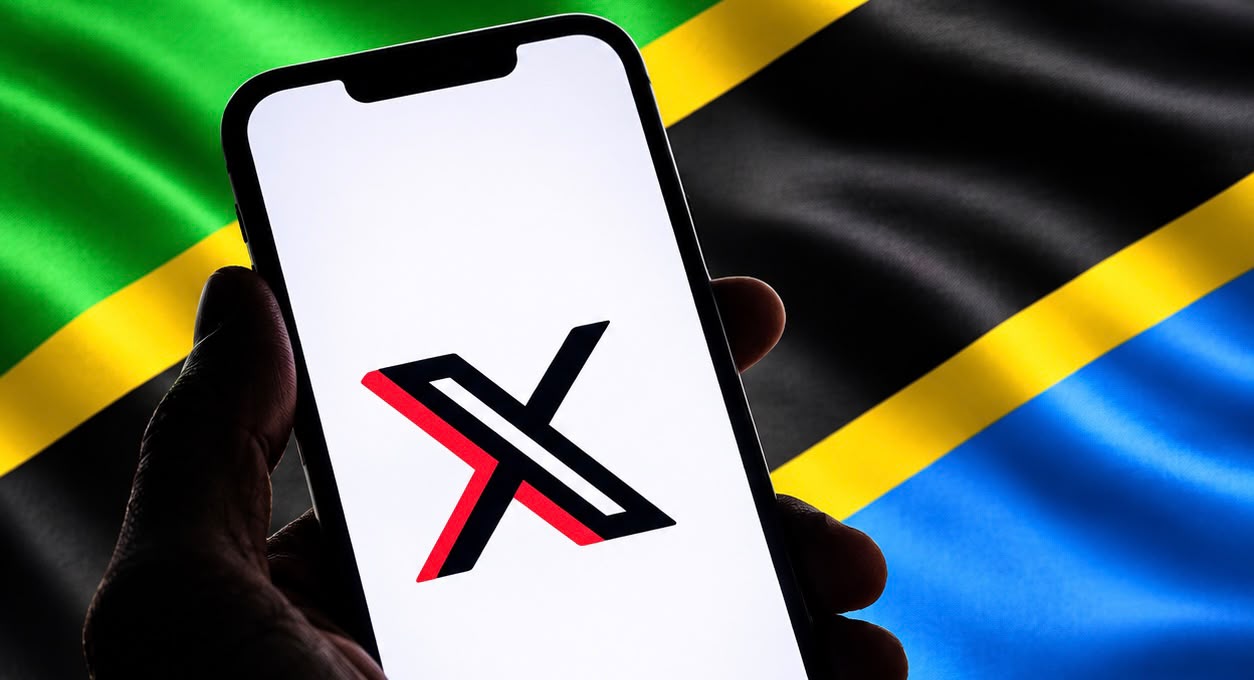
Tanzania’s High Court has declared the government’s decision to block social media platform X, formerly Twitter, unconstitutional, ordering authorities to immediately remove restrictions that have prevented users across the country from accessing the platform since May 2025.
The ruling, delivered on November 24, 2026, by a three-judge panel at the High Court’s Dar es Salaam Sub-Registry, followed a constitutional petition filed by human rights activists Tito Elia Magoti and Kumbusho Dawson Kagine against the government, the Tanzania Communications Regulatory Authority (TCRA) and the Attorney General.
In Miscellaneous Civil Cause No. 2378 of 2026, Justices Salma Maghimbi, Elinaza Luvanda and Elizabeth Mkwizu found that the decision to restrict access to X from May 20, 2025, violated several provisions of Tanzania’s Constitution, including Articles 18, 20(1), 26(1) and 29(1).
The judges ruled that the government had failed to demonstrate that existing laws gave it authority to block an entire social media platform, emphasizing that regulatory powers over prohibited online content did not extend to shutting down access to the whole network.
“Accordingly, we direct the Respondents to immediately remove any restrictions, blocks, bandwidth throttling, or other technical or administrative measures imposed against accessing the social media platform X,” the court ordered.
The judges further directed the authorities to ensure that the petitioners and the general public could access the platform without hindrance.
The court also distinguished between regulating specific prohibited material and preventing an entire population from using a communication platform. It clarified that the ruling did not prevent TCRA from exercising its lawful powers under Regulation 19(b) of the Electronic and Postal Communications (Online Content) Regulations, 2020, to order the removal of or restrict access to specific prohibited content.
In reaching its decision, the judges found that the government had failed to follow due process because affected users were not given prior notice, an opportunity to be heard or a means of appealing the restriction.
The court also considered the nationwide blockade disproportionate, noting that authorities could have targeted specific offending content or those responsible for publishing it instead of restricting access to the entire platform.
The government’s argument that Tanzanians could use alternative platforms, including Facebook, Instagram, TikTok, WhatsApp and YouTube, was also rejected as sufficient justification for the restriction. The judges observed that different platforms serve different audiences and offer distinct communication features, meaning access to other networks did not replace the rights affected by the X blockade.
The case was brought by Magoti and Kagine as a public-interest constitutional challenge representing the interests of thousands of Tanzanians whose activities had been affected by the restrictions. These included journalists, traders, students, teachers, lawyers, politicians, content creators and public institutions that relied on the platform for communication and access to information.
Represented by advocates Jebra Kambole and Robert Majige, the petitioners argued that the government’s decision infringed constitutional protections relating to freedom of expression, access to information and participation in public affairs.
The government, however, defended the restrictions, admitting that it had blocked X while maintaining that the decision was lawful and necessary to protect public safety, public health and public morals. Its representatives argued that the platform had failed to comply with Tanzanian laws governing prohibited online content despite receiving prior notifications, describing the blockade as a last resort.
The respondents also maintained that constitutional rights were not absolute and that users could continue accessing information through other social media platforms and traditional media.
The court nevertheless found that the government had not produced sufficient evidence to establish that blocking the entire platform was necessary or proportionate to its stated objectives.
The restrictions began on May 20, 2025, following reports that the official Tanzania Police Force account on X had been compromised and used to publish pornographic material and false claims about the death of President Samia Suluhu Hassan. The government subsequently restricted access to the platform, leaving users on affected telecommunications networks unable to access it without using virtual private networks (VPNs).
Internet monitoring organization Open Observatory of Network Interference (OONI) later documented network-level blocking of X in Tanzania, with measurements indicating that restrictions were implemented through internet service providers.
The High Court’s decision now establishes that authorities cannot rely on general content-regulation powers to justify a blanket shutdown of an entire social media platform. However, the ruling does not remove the government’s authority to enforce Tanzanian laws against specific prohibited online material through lawful procedures.
The court granted the applications seeking restoration of access but did not award the petitioners damages, taking into account the public-interest nature of the proceedings.
The decision marks a significant development in Tanzania’s constitutional and digital-rights jurisprudence, particularly concerning the limits of government authority over online communication and the protection of citizens’ access to information.






Comments0 ShowHide