


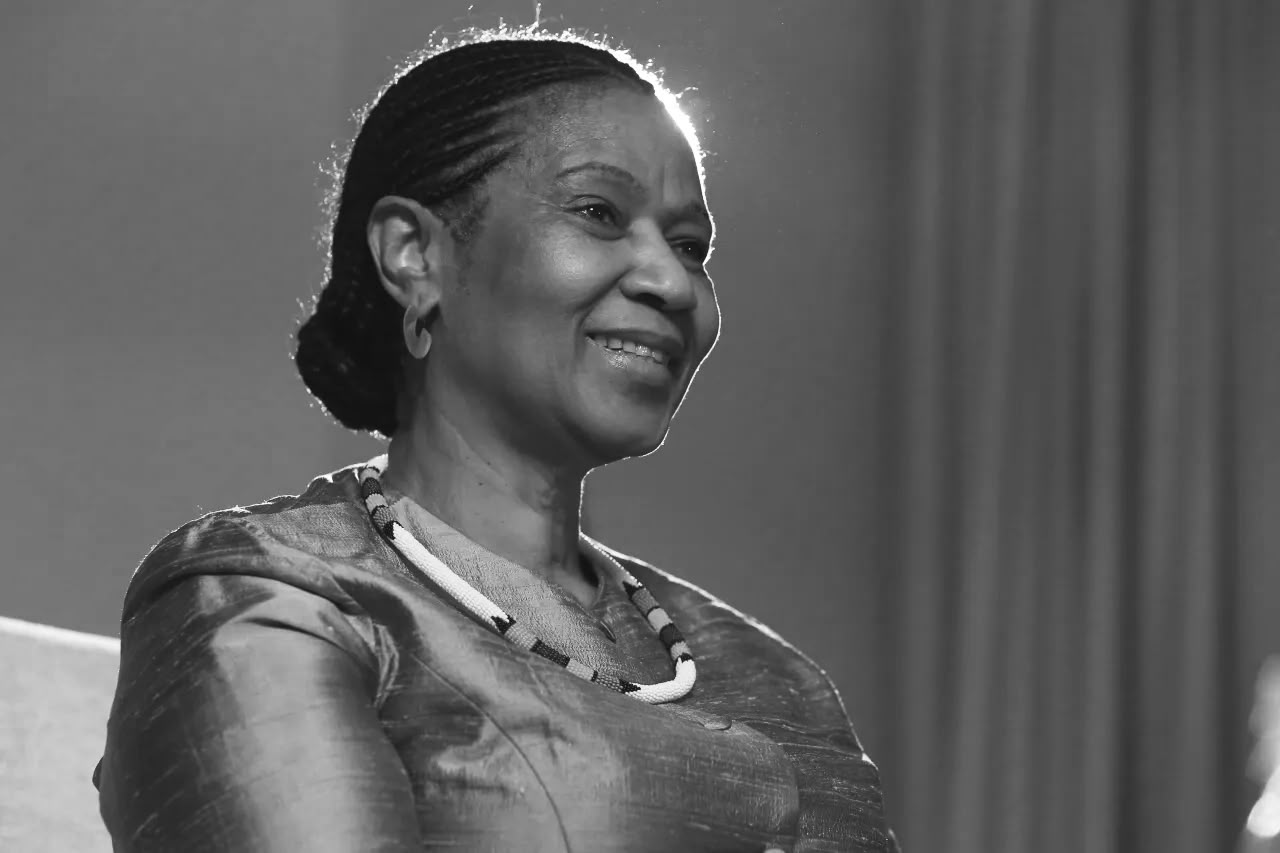
Former South African Deputy President Phumzile Mlambo-Ngcuka, who made history as the first woman to hold the country’s second-highest political office before going on to lead the United Nations’ agency for gender equality, has died at the age of 71.
Her death was announced by South Africa’s Presidency on Friday, November 20, 2026, with Acting President Paul Mashatile conveying condolences to her family on behalf of President Cyril Ramaphosa, the government and the South African people.
A subsequent statement published by the South African government on Saturday said Mlambo-Ngcuka died following complications from a medical procedure she had undergone approximately two weeks earlier. The family described her death as a major loss and thanked members of the public for messages of support.
Mlambo-Ngcuka occupied an important place in South Africa’s post-apartheid political history. Appointed Deputy President in June 2005 under then-President Thabo Mbeki, she became the first woman to hold the position, serving until 2008.
Her appointment came after Jacob Zuma’s removal from the deputy presidency amid a political controversy surrounding corruption allegations connected to an arms deal. Mlambo-Ngcuka’s husband, Bulelani Ngcuka, had previously served as South Africa’s National Director of Public Prosecutions and was involved in the legal proceedings surrounding Zuma.
Before becoming Deputy President, she had already established a substantial record in government and public service. She entered South Africa’s first democratic Parliament in 1994, following the end of apartheid, and chaired the Portfolio Committee on Public Service and Administration. She also participated in the Constitutional Assembly, which helped draft the country’s democratic Constitution.
Her ministerial career included serving as Deputy Minister of Trade and Industry between 1996 and 1999 before becoming Minister of Minerals and Energy, a position she held from 1999 to 2005. During her time in the latter office, she advocated for changes in the mining sector, including greater participation and ownership by women.
After leaving the deputy presidency, Mlambo-Ngcuka continued her public service career internationally. In August 2013, she became Executive Director of UN Women, the United Nations entity responsible for advancing gender equality and the empowerment of women and girls. She also served as a United Nations Under-Secretary-General, remaining in the position until 2021.
Her leadership at UN Women placed her at the center of international efforts to advance women’s rights, improve economic opportunities for women and address barriers affecting girls’ education and participation in public life.
Outside government and international institutions, she established the Umlambo Foundation, an organization focused on supporting teachers and improving educational opportunities for children, particularly in disadvantaged communities.
News of her death prompted tributes from political leaders and international institutions. United Nations Secretary-General António Guterres described her as a lifelong advocate for the rights and empowerment of women and girls, while recognizing her contribution to advancing gender equality.
The Southern African Development Community (SADC) also expressed its condolences, honoring her contribution to public service and women’s empowerment across the region.
In Tanzania, President Samia Suluhu Hassan extended condolences to South African President Cyril Ramaphosa, Mlambo-Ngcuka’s family and the people of South Africa on behalf of the Tanzanian government and its citizens.
South Africa’s Parliament also paid tribute to her involvement in the country’s democratic institutions, describing her as an opponent of apartheid and an advocate for social justice, human dignity and the rights of women and girls.
The family has requested privacy as it comes to terms with her death. Details of the memorial and funeral arrangements are expected to be communicated following consultations with the Presidency.
Comments0 ShowHide