


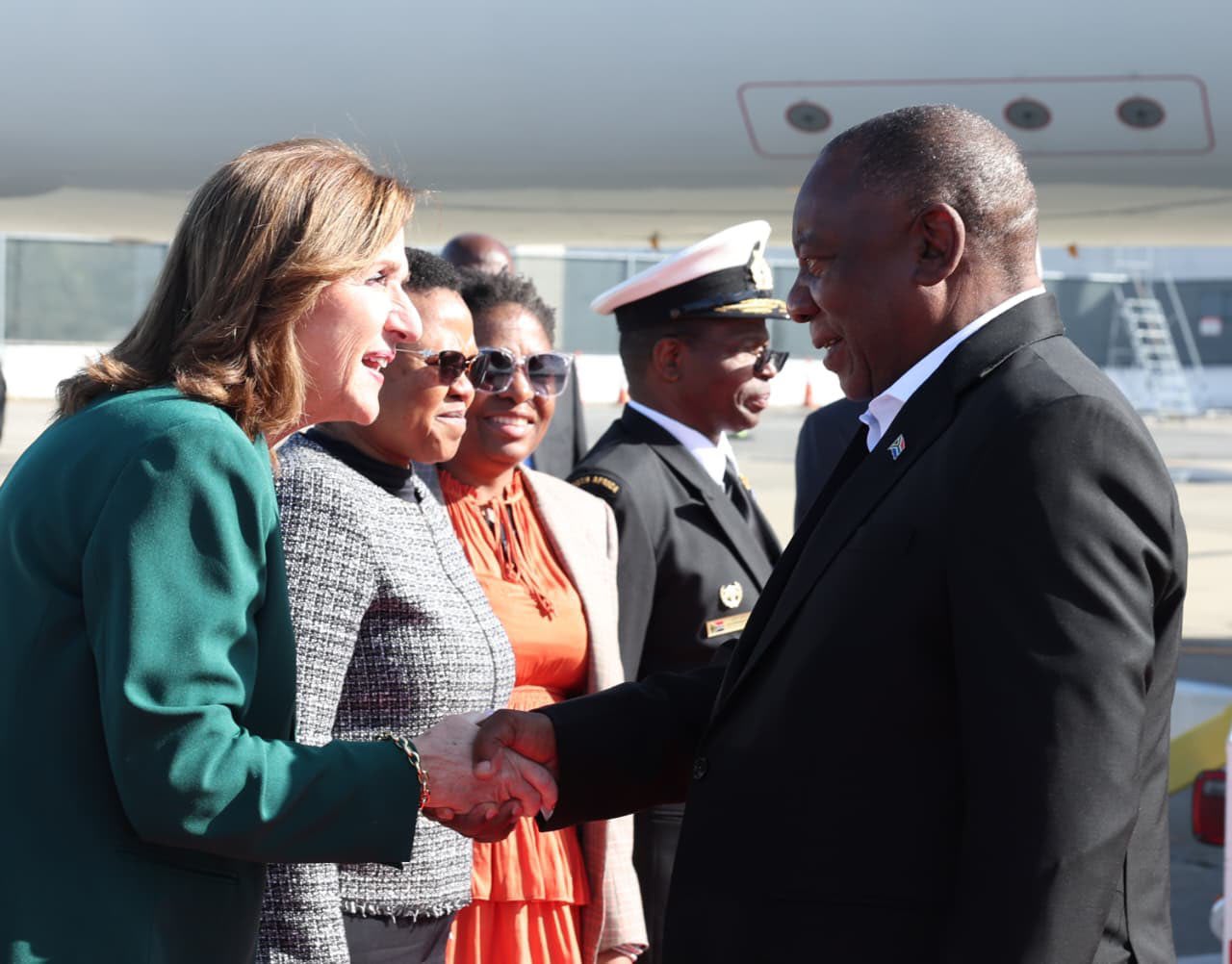
South African President Cyril Ramaphosa has arrived in California, United States, leading a high-level delegation on a working visit to Silicon Valley aimed at strengthening the country’s understanding of artificial intelligence (AI), attracting investment and expanding its technological capabilities.
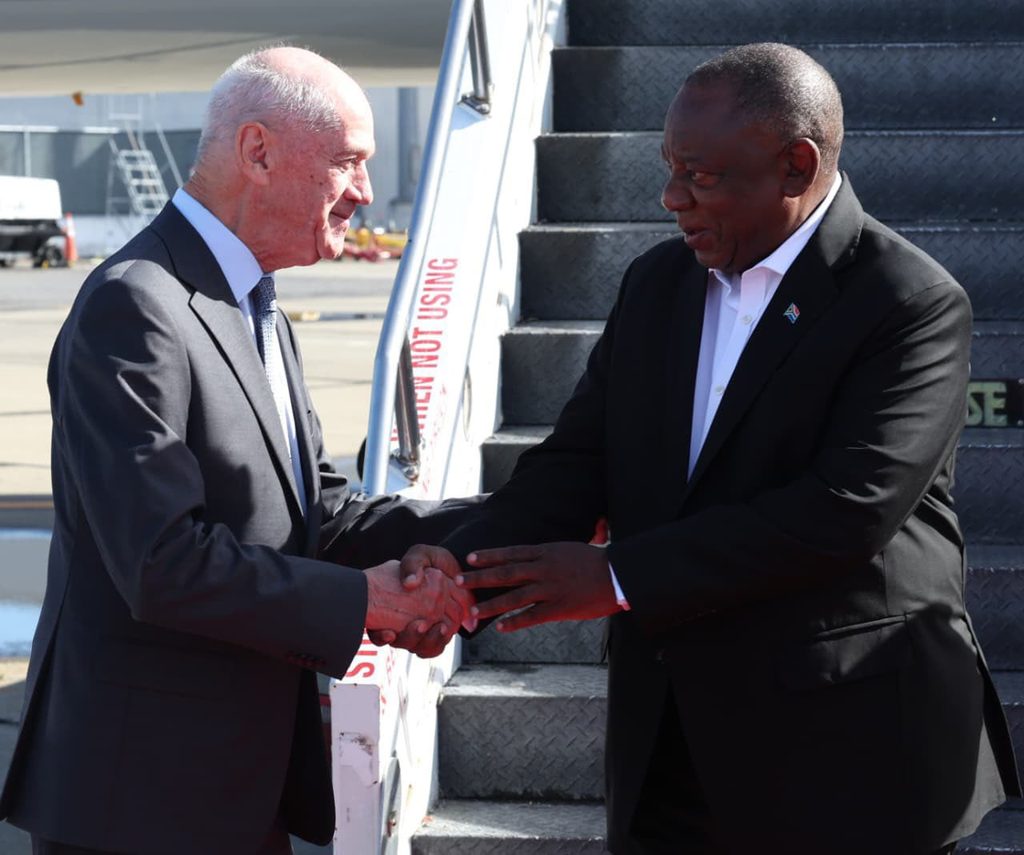
Ramaphosa arrived in California on Saturday, November 14, where he was received by Santa Clara Mayor Lisa M. Gillmor and South Africa’s Ambassador to the United States, Roelf Meyer, according to an announcement by the South African Presidency.
The President is leading a delegation comprising government officials, business representatives, academics, researchers, technical experts and university students. The visit, scheduled to run from November 15 to 21, is intended to expose South African stakeholders to developments in the global AI industry and help shape the country’s approach to developing and adopting the technology.
The programme includes engagements with leading technology companies, investors, research institutions and academic experts, with discussions covering artificial intelligence, robotics, cloud computing, cybersecurity, data infrastructure and digital innovation.
One of the major engagements will take place at Stanford University, where the delegation is expected to meet academics and venture capital investors to discuss the relationship between technological research, commercial innovation and investment. The programme will also include a visit to a robotics laboratory.
The delegation is also scheduled to visit major technology companies, including Google and Cisco in Mountain View on November 19, followed by engagements with Palo Alto Networks and Microsoft’s Experiential Centre in Santa Clara on November 20.
A central part of the visit will be the South Africa AI Opportunity gathering, organised under the theme “Building the African AI Economy: Infrastructure, Investment and Innovation“. The discussions are expected to examine what is required to develop a competitive AI industry, including investment in data centres, computing capacity, reliable electricity supply and technology start-ups.
These issues are particularly important as artificial intelligence increasingly becomes part of economic activity, government services, education, healthcare and business operations. Countries seeking to benefit from the technology need more than access to AI applications; they also require the infrastructure, skilled workforce, research capacity and investment needed to develop and deploy them.
For South Africa, the visit offers an opportunity to examine how experience from established technology centres could inform its own development plans. The government has identified AI as an important part of its digital economy ambitions, with potential applications in public administration, healthcare, education, criminal justice and other sectors.
The delegation will also explore opportunities for international partnerships, investment and research collaboration, while considering issues surrounding AI safety, data protection, digital sovereignty and the impact of automation on employment.
The visit comes as South Africa seeks to strengthen its position in Africa’s growing digital economy and attract investment into technology infrastructure and innovation. However, the extent to which the engagements will translate into tangible investments, new partnerships and expanded technological capacity at home will depend on what follows the discussions.
The South African government says the broader objective is to ensure that the country can participate more meaningfully in the global AI economy while developing its own capabilities and ensuring that the technology contributes to inclusive economic growth.










Comments0 ShowHide