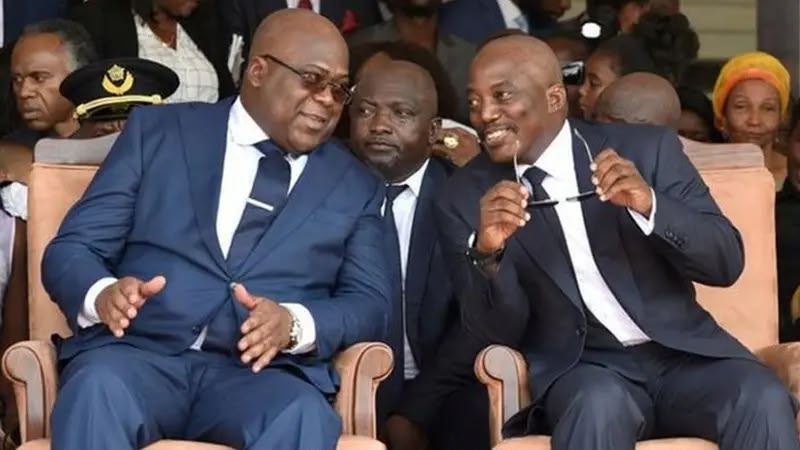
Former Democratic Republic of the Congo President Joseph Kabila has accused President Félix Tshisekedi’s administration of undermining peace efforts and worsening the country’s political and security crises, renewing his call for inclusive national dialogue as fighting continues in the east.
In an address to the Congolese people on Friday, October 9, Kabila said the country was in peril and needed urgent collective action to prevent further deterioration. He argued that proposals he presented in May 2025 had been ignored, leaving the country with worsening insecurity, weakened national cohesion and no credible prospect of improvement.
“The Congo is in peril. Saving it is both an imperative and an urgent necessity,” Kabila said, warning that the country had reached a decisive moment in its history.
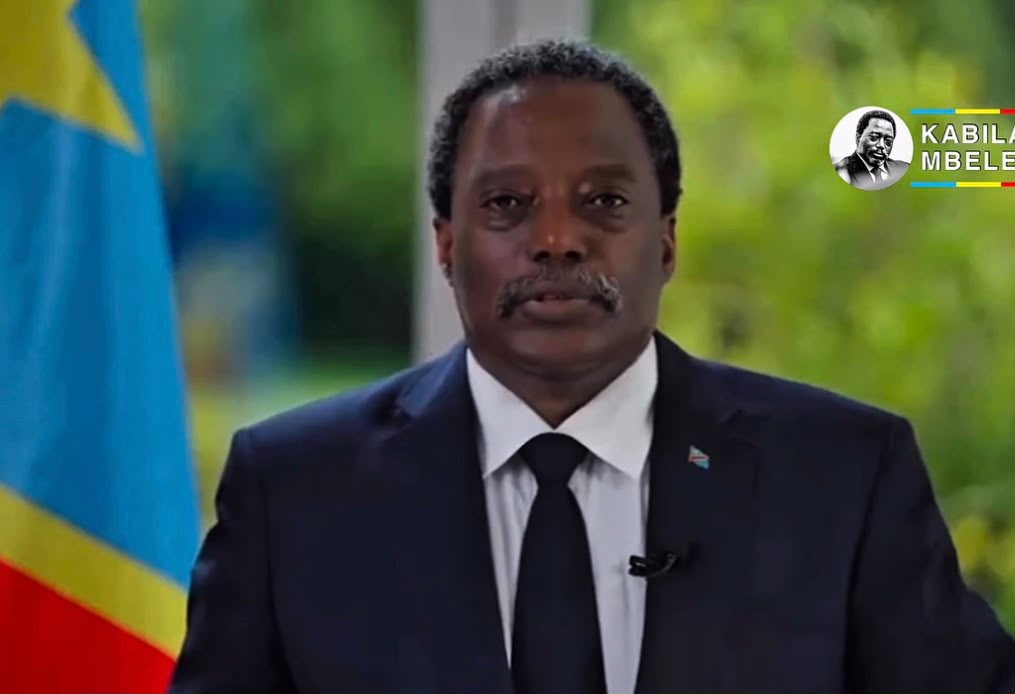
The former president, who left office in January 2019, criticised what he described as the government’s preference for military confrontation over political negotiations. He accused the administration of failing to honour commitments under the Doha peace process, continuing military operations that undermine negotiations and refusing to engage in what he considers genuinely inclusive national dialogue.
Kabila also accused government forces of cooperating with armed groups, including the FDLR and Wazalendo militias, and alleged that weapons continued to be supplied to forces fighting alongside the government. These were claims made by Kabila in his political address and were not independently established by the speech itself.
He argued that the government had failed to make meaningful progress through several regional and international peace initiatives, including efforts associated with the East African Community, the Southern African Development Community, the African Union and other international partners.
Kabila also criticised the failure to advance a national dialogue initiative promoted by the Congolese Catholic and Protestant church leadership. He said the proposal had attracted support among political and social actors but had not produced the inclusive process needed to address the country’s divisions.
For Kabila, dialogue should not be treated as a concession to opponents but as a necessary means of ending the conflict, rebuilding trust and restoring national cohesion. He accused the authorities of seeking the submission of those who disagree with them instead of negotiating a political settlement.
His latest intervention follows an address on May 23, 2025, in which he proposed a 12-point programme to address the country’s crisis. The proposals included ending the war, restoring state authority and the rule of law, protecting democratic freedoms, reconciling Congolese communities, improving governance, strengthening relations with neighbouring countries and neutralising armed groups.
He also called for the withdrawal of foreign troops from Congolese territory and an end to the use of mercenaries. Kabila said the recommendations had not led to the changes he had hoped for and argued that the country’s condition had deteriorated since his previous address.
The speech comes as the government continues to face pressure over the conflict in eastern DR Congo, where the AFC/M23 coalition has fought Congolese government forces and expanded its territorial control. Diplomatic initiatives, including the Doha process, have sought to establish a ceasefire and create conditions for a wider political settlement, but implementation has remained difficult.
Kabila’s position on the conflict is politically contentious. In April 2026, the United States imposed sanctions on him over alleged support for the AFC, the political-military coalition whose armed wing includes M23. Washington accused him of providing financial support and encouraging defections from the Congolese military. These remain allegations made by the US government, rather than a finding established by the sanctions announcement itself. Kabila’s political position and the accusations against him have further complicated debate over his role in the country’s future.
Notably, in his October 9 address, Kabila focused his criticism on Tshisekedi’s administration and did not directly name AFC/M23 or Rwanda when discussing the war. That omission is significant given the international attention surrounding the coalition and the allegations against Kabila, although it does not by itself establish his motives or prove any additional involvement.
Beyond the conflict, Kabila accused the government of weakening democratic institutions, restricting civil liberties, concentrating political power and allowing corruption and the misuse of public resources. He also criticised what he described as the politicisation of state institutions and the deterioration of relations among Congolese communities.
He argued that the country needed a change in the way it was governed, with greater respect for the rule of law, fundamental freedoms and the interests of the population. He called on Congolese citizens to take responsibility for the country’s future rather than remain passive as the crisis deepens.
Kabila’s address did not present a newly detailed peace agreement or announce an immediate political initiative. Instead, he said he would share his views on what should be done in the coming hours, days and weeks to respond to the seriousness of the situation and help save the country.
The speech adds to the pressure for a political settlement in DR Congo, where military operations and diplomatic negotiations have yet to produce a lasting end to the conflict in the east. It also highlights the continuing dispute between Kabila and Tshisekedi over the direction of the country, the conduct of the war and the conditions needed for a credible national dialogue.