Skip to content
SWAHILI TODAY

Commonwealth

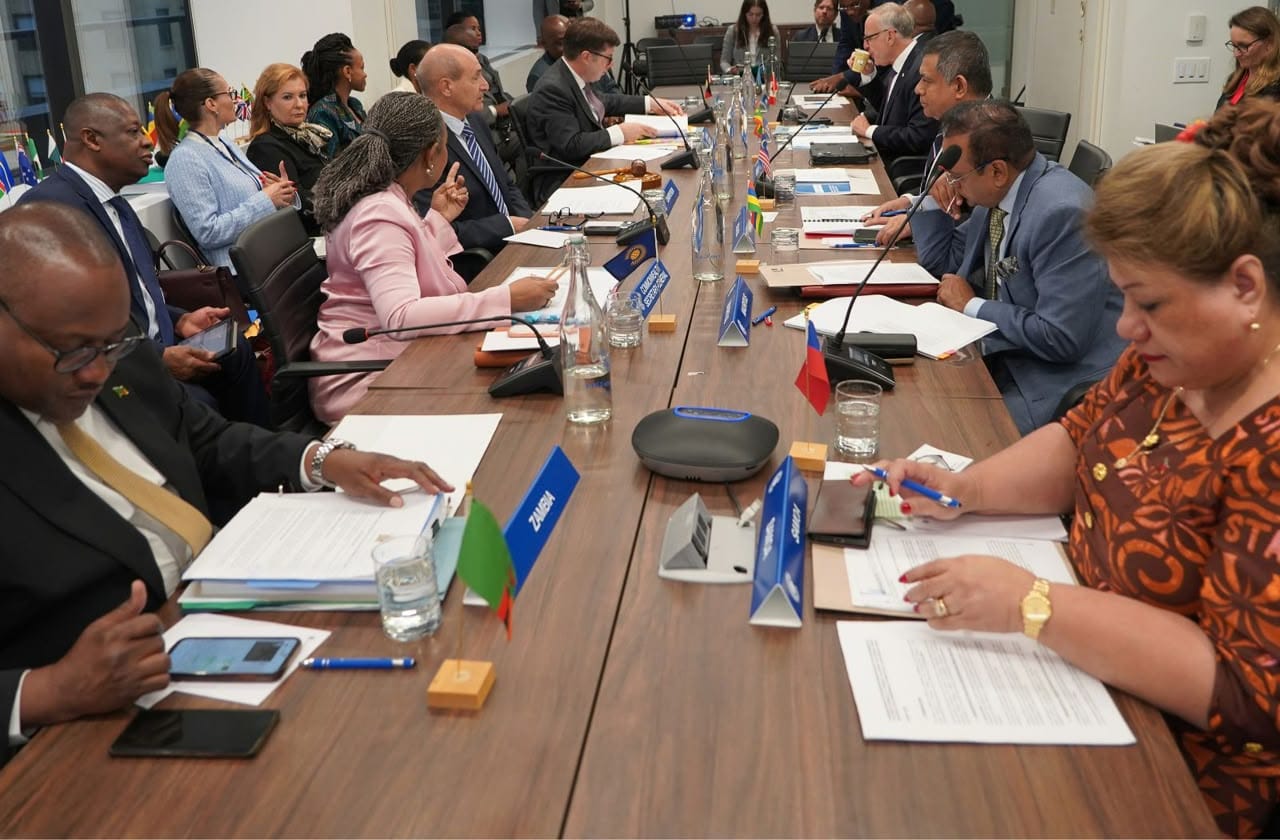
The Commonwealth of Nations is a voluntary intergovernmental association of 56 sovereign states spanning Africa, Asia, the Americas, Europe, and the Pacific. Tracing its origin from the dissolution of the British Empire through the 1931 Statute of Westminster and 1949 London Declaration, the modern Commonwealth operates on the principle of consensus, sovereign equality, and shared values outlined in the Commonwealth Charter. Anchored by the Commonwealth Secretariat in London, the organization focuses its international diplomacy on democratic governance, election monitoring, climate adaptation for small island states, youth empowerment, and economic trade harmonization across member states.

Quick facts about Commonwealth

  1. It is the voluntary, intergovernmental association comprising 56 independent member countries representing over 2.7 billion citizens over 60% of whom are under the age of 30. Its name derives from the 15th-century English phrase common weal, translating to "common well-being" or "public good."
  2. It was formally established in its modern non-imperial form via the 1949 London Declaration, which dropped the prefix "British," allowed republics to retain full membership without allegiance to the British Crown, and recognized King George VI (and subsequently Queen Elizabeth II and King Charles III) as the symbolic Head of the Commonwealth.
  3. It features a diverse structural composition of 36 parliamentary and presidential republics, 15 Commonwealth realms sharing King Charles III as head of state, and 5 independent national monarchies (Brunei, Eswatini, Lesotho, Malaysia, and Tonga).
  4. It expanded beyond historical British Empire territories by admitting former Portuguese colony Mozambique (1995), former Belgian mandate Rwanda (2009), and former French territories Gabon and Togo (2022).
  5. They operate under the administrative direction of the Commonwealth Secretariat headquartered at Marlborough House in London, led by Commonwealth Secretary-General Shirley Ayorkor Botchwey, while convening biennial policy summits at the Commonwealth Heads of Government Meeting (CHOGM).
  6. They enforce democratic accountability through the Commonwealth Ministerial Action Group (CMAG), which historically suspended member states over military coups and constitutional breaches, including Nigeria (1995), Pakistan (1999 and 2007), and Fiji (2000 and 2009).
  7. They maintain specialized institutional mechanisms including the Commonwealth Charter (adopted in 2012), the quadrennial multi-sport Commonwealth Games, and dedicated economic advocacy networks for 33 small island developing states (SIDS) that make up the majority of the world's officially designated small nations.

News about Commonwealth

ADVERTISEMENT