


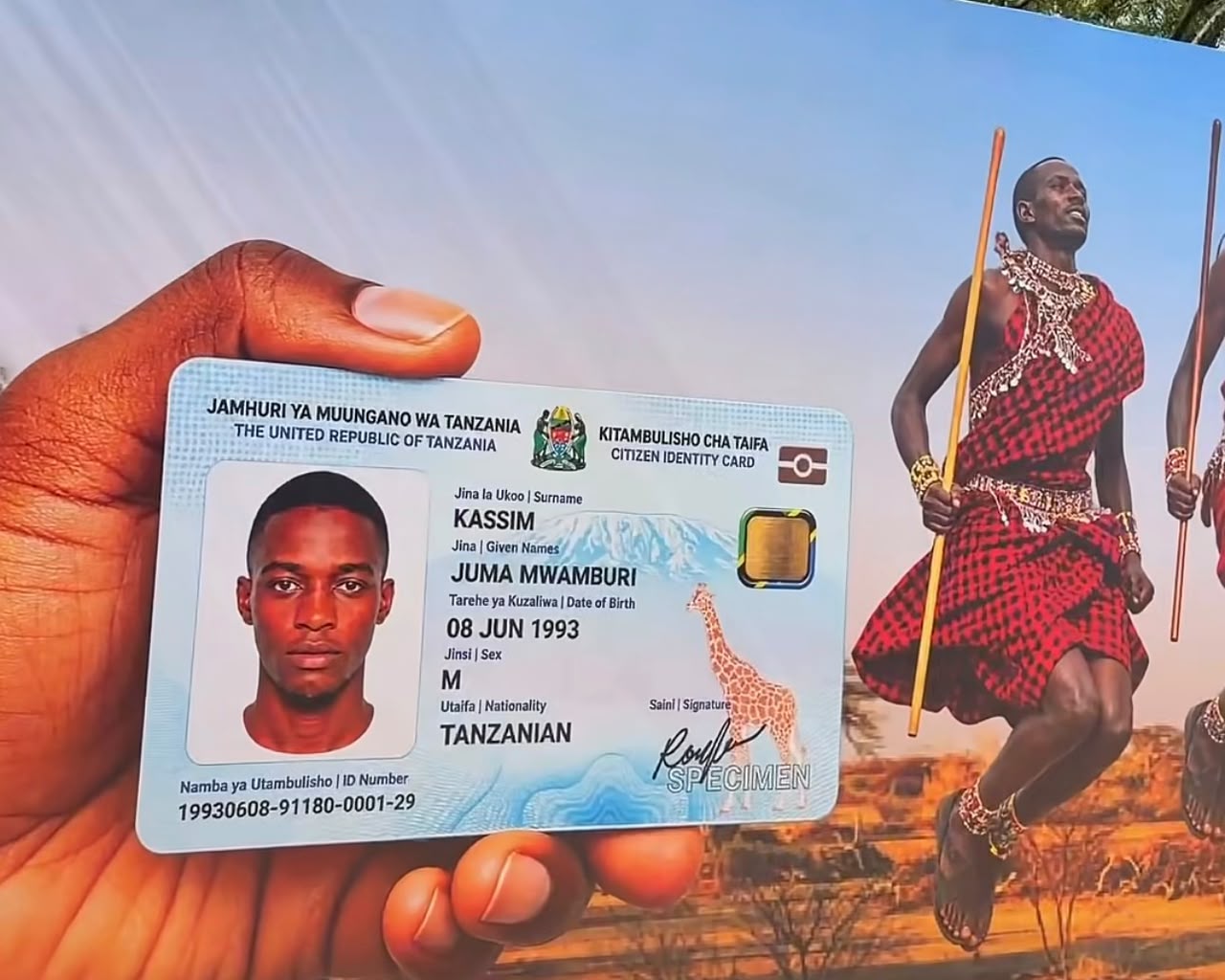
Tanzania’s National Identification Authority (NIDA) has showcased three different national identity card designs intended for Tanzanian citizens, foreign residents and refugees, as the country continues to update its identification infrastructure and expand the range of services connected to personal identification.
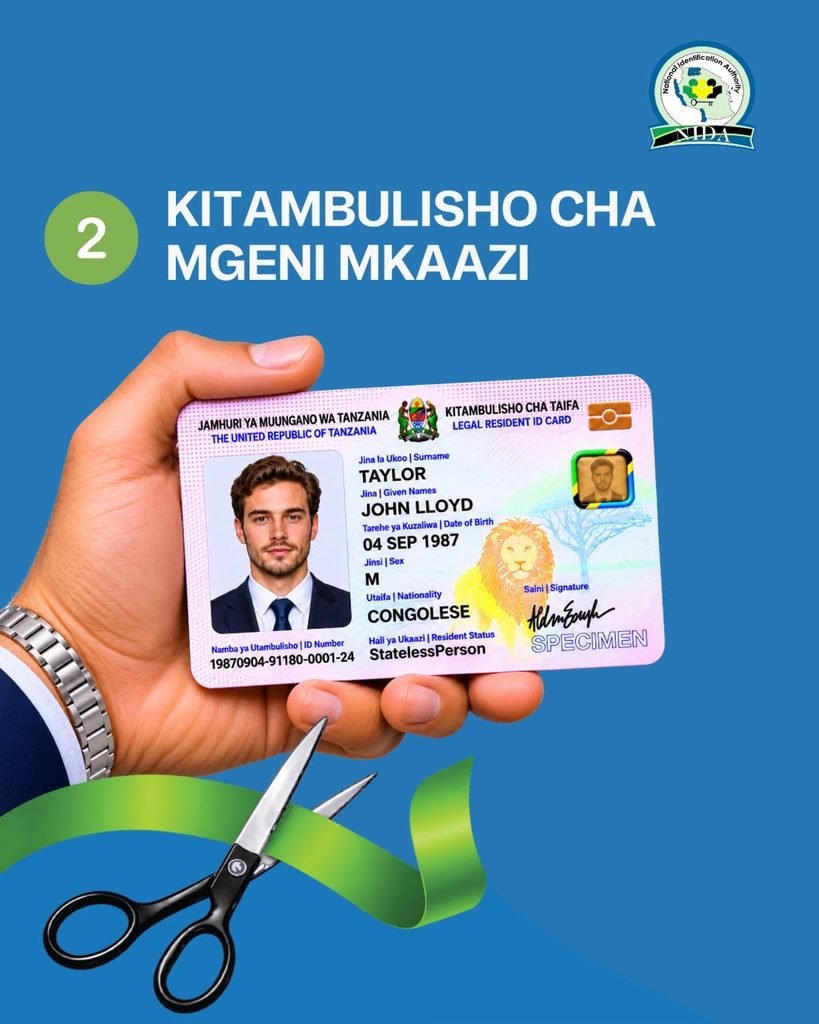
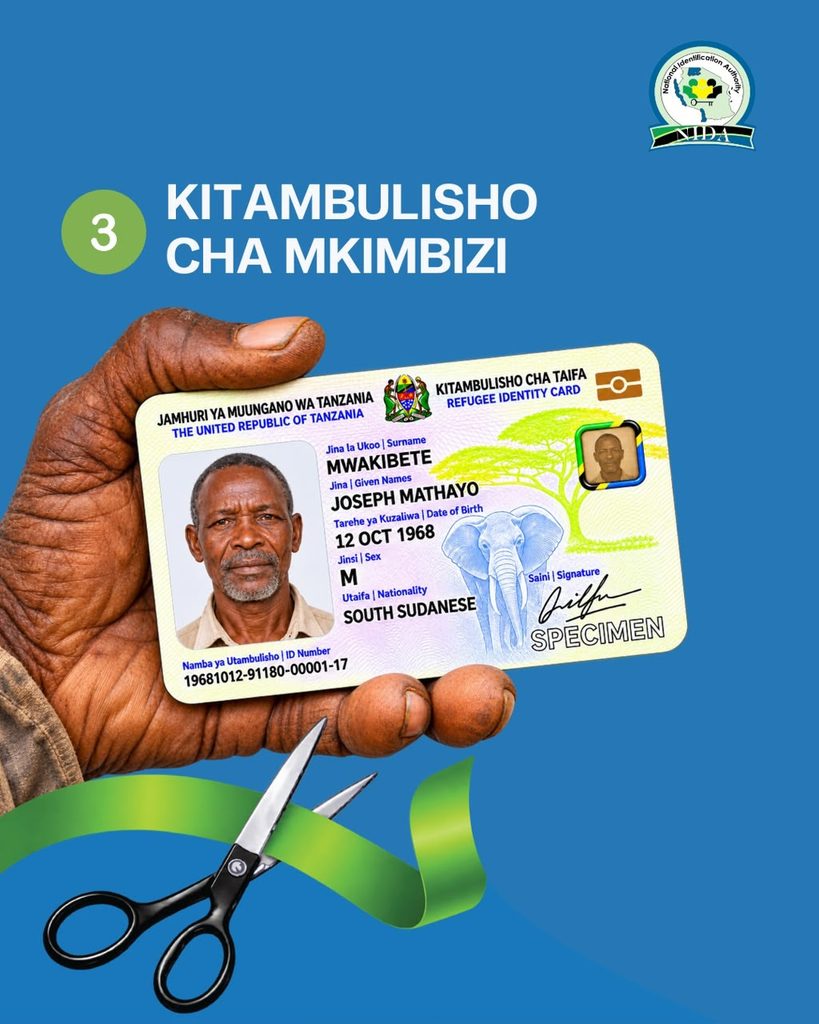
The designs, published through NIDA’s official social media account, show separate cards for Tanzanian citizens, resident foreigners and refugees. Each carries distinct identification details, including the holder’s name, date of birth, photograph, nationality and identification number, alongside features intended to distinguish the different registration categories.
The publication comes a day after the government launched the 2026 edition of Tanzania’s national identity card at a ceremony in Kibaha, Coast Region, on November 18. Prime Minister Mwigulu Nchemba, representing President Samia Suluhu Hassan, officiated at the launch, which also introduced new card-production technology, the NIDA Wallet mobile application and 10 vehicles intended to bring registration services closer to communities.
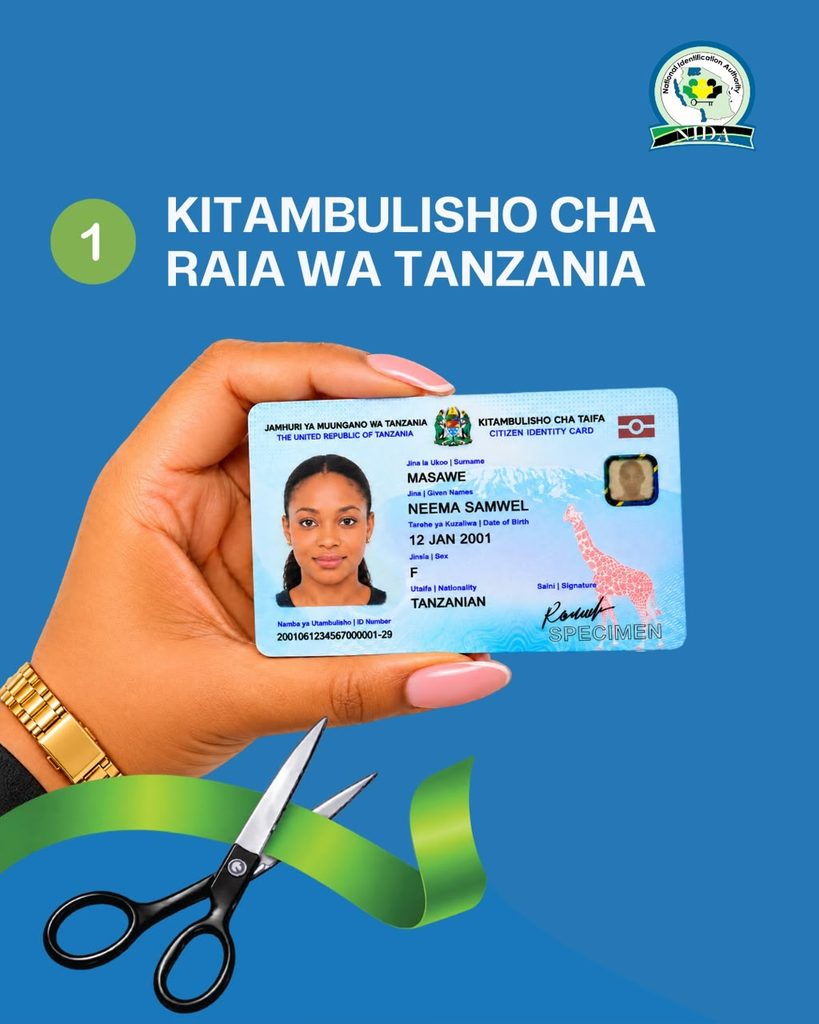
Although the three designs serve different groups, their presentation comes against the background of a wider effort to strengthen the country’s identification system and make identity information more useful across government institutions and private service providers.
For Tanzanian citizens, the redesigned card is intended to accommodate more information than previous versions. NIDA Director General James Kaji said at the launch that the upgraded card would have eight information sections, compared with four in the earlier version.
The expanded system is expected to accommodate information linked to birth registration, health insurance, Taxpayer Identification Numbers (TIN), blood groups, driving licences and marital status. The government says the changes will reduce the need for citizens to carry several separate documents when accessing services.
The integration is also intended to make it easier for institutions to verify information without repeatedly requiring individuals to present different documents. According to Kaji, birth certificate details will be accessible through the system, while the inclusion of tax and health insurance information could simplify access to services offered by the respective institutions.

The government has also identified opportunities to use the upgraded identification system for regional travel. Under arrangements with countries that agree to recognise Tanzanian national identity cards as travel documents, the cards are expected to facilitate cross-border movement without requiring travellers to use passports for those journeys.
However, the arrangements depend on agreements with participating countries and coordination between the relevant authorities. The new card should therefore not be interpreted as automatically replacing passports for international travel.
The expansion of NIDA’s services also reflects the growing role of national identification in accessing everyday services. Home Affairs Minister Patrobas Katambi said 157 institutions, comprising 72 public and 85 private entities, had been connected to NIDA’s system.
This means the authority’s identification infrastructure is increasingly relevant beyond the issuance of physical identity cards. Its records can support verification processes across different institutions, making accurate registration and the protection of personal information important considerations as more services become connected.
The introduction of separate designs for resident foreigners and refugees also draws attention to the different groups covered by identification and registration processes in Tanzania.
The resident foreigner card, labelled Legal Resident ID Card in NIDA’s published specimen, is distinct from the national identity card issued to Tanzanian citizens. The distinction is important because possession of a resident identity card does not confer Tanzanian citizenship. It identifies a foreign national within the applicable registration arrangements.
The refugee specimen is similarly identified as a separate category rather than a variation of the citizen’s national identity card. Its appearance in NIDA’s publication illustrates the authority’s presentation of different identification documents, although the announcement does not provide further details about eligibility, registration procedures or the legal arrangements governing its issuance.
Under Section 10 of Tanzania’s Registration and Identification of Persons Act, the legislation identifies two categories of identity cards: those issued to citizens of the United Republic and those issued to aliens resident in the country. The separate refugee specimen therefore should not be taken as evidence that the legal classification under that provision has been amended.
Beyond the appearance of the cards, the government has also introduced changes to their production. The upgraded technology is intended to address complaints about earlier cards whose printed photographs and personal details sometimes faded with use.
The new production process incorporates laser engraving, which embeds personal details within the card’s layers rather than relying solely on surface printing. The technology is intended to improve durability and make the documents more difficult to alter or counterfeit.
The launch also comes as authorities face the challenge of ensuring that registered individuals actually receive their identity cards. Kaji disclosed that NIDA had more than 1.2 million uncollected cards and urged people who had completed registration to collect their documents from the relevant offices.
Officials also stressed that the introduction of the upgraded version does not invalidate previously issued national identity cards. Existing holders are not required to replace valid cards simply because a newer design has been introduced.
The growing integration of personal records, however, raises questions about how information will be protected as more institutions gain access to the identification system. Linking identity records with health, tax and other personal information could reduce administrative difficulties, but it also increases the importance of preventing unauthorized access, misuse and inaccurate records.
Tanzania’s Personal Data Protection Act, 2022, provides a legal framework for handling personal information, while the Registration and Identification of Persons Act also contains provisions addressing the disclosure and control of identification data. Effective implementation will be important as the number of connected institutions and uses of NIDA records increases.
For NIDA, the latest developments represent a move beyond issuing physical identity cards towards a more connected identification system. The introduction of different card designs, upgraded production technology and digital identification services places the authority at the centre of several administrative processes that affect citizens and other registered populations.
The extent to which these changes improve people’s access to services will ultimately depend on how reliably the systems operate, how effectively institutions coordinate and whether individuals can obtain and use their identification documents without unnecessary delays.







Comments0 ShowHide