


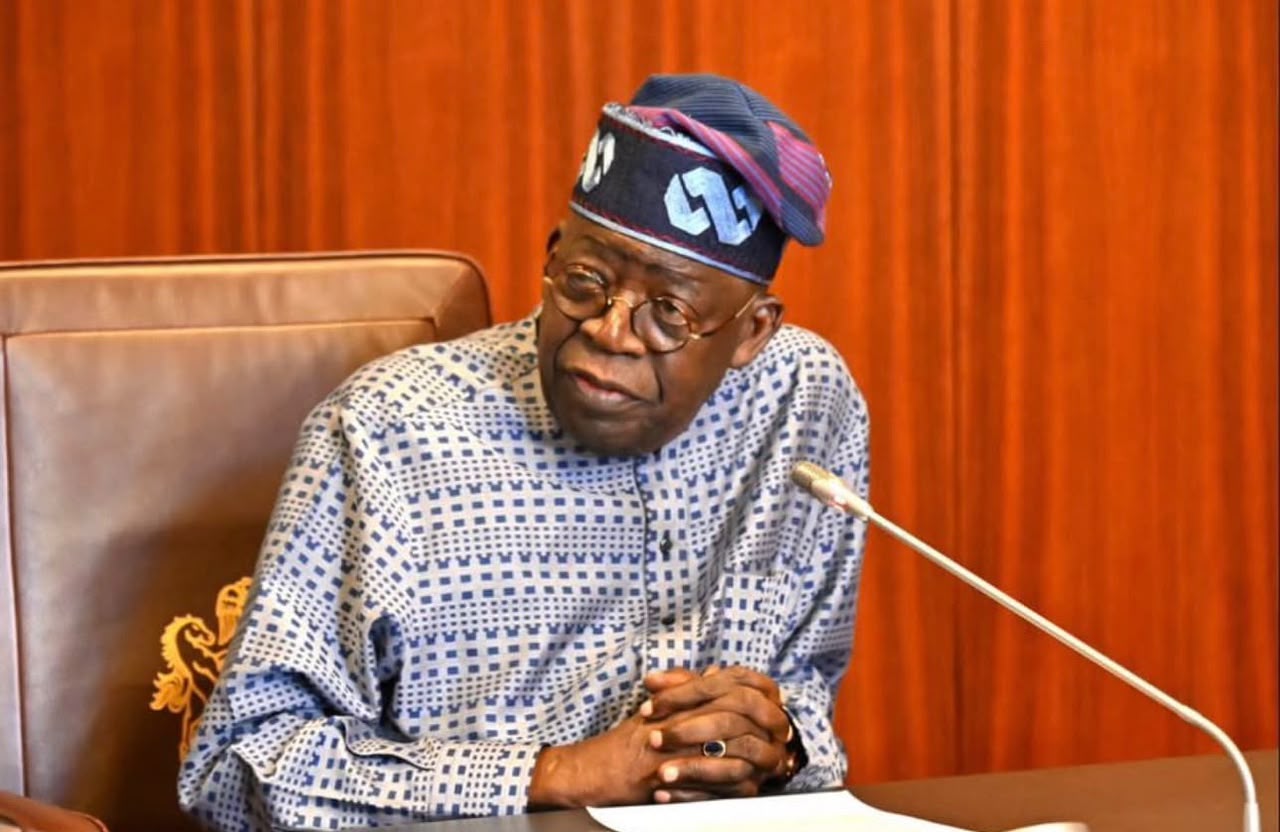
Nigeria is preparing for a major expansion of its military and police forces under a five-year security strategy announced by President Bola Tinubu‘s administration, as the country continues to face terrorism, banditry, kidnappings and other forms of violence.
The strategy includes plans to recruit an additional 28,000 soldiers and 50,000 police officers, establish four new Army divisions, expand military training facilities and improve intelligence and surveillance operations.
Details of the Five-Year Strategic Defence Operations Plan were published by Nigeria’s State House on Monday, November 16, 2026, outlining the government’s approach to addressing security challenges that have affected several parts of the country.
The administration says the plan will provide a framework for coordinating military operations, personnel requirements, equipment acquisition and defence spending according to the country’s security needs.
Among the measures already approved by Tinubu is the establishment of two additional Army training depots in Osogbo, Osun State, and Amasiri-Edda, Ebonyi State. Each facility is designed to accommodate 6,000 recruits at a time, giving the two centres a combined training capacity of 12,000 soldiers.
The Osogbo facility currently has 5,210 recruits undergoing training, according to the government’s announcement.
The administration also plans to strengthen military infrastructure through a 700-unit barracks project in Ikere-Ekiti, Ekiti State, intended to improve accommodation and working conditions for military personnel.
The expansion comes alongside the creation of four new Army divisions and the restructuring of existing formations, which the government says will improve operational coverage and allow troops to respond more quickly to security threats.
The government has also presented figures from its ongoing military operations as evidence of progress against armed groups. According to the announcement, military operations over the past three years have eliminated more than 15,000 Boko Haram fighters and bandits, while over 130,000 Boko Haram fighters and their dependents have surrendered through Operation Safe Corridor, a government rehabilitation programme for former insurgents.
These figures were presented by the administration as evidence of its combined military and rehabilitation approach. They have not, however, been independently established by the information accompanying the announcement.
Despite the scale of the proposed expansion, questions remain about whether increasing the number of security personnel will translate into lasting improvements in public safety.
An August 25 assessment by Chatham House, published following the announcement of Tinubu’s military expansion, warned that Nigeria could end up with a larger army without necessarily improving its effectiveness if deeper institutional reforms were not addressed.
The assessment identified concerns involving military leadership, operational planning, training, equipment shortages, corruption and coordination among security agencies. It also raised questions about how the expansion would be financed without placing additional pressure on other areas of public spending.
The concerns are particularly relevant because Nigeria’s security challenges extend beyond the military’s traditional counterterrorism operations. Armed groups, kidnappers and bandits have continued to threaten communities, while the country’s security agencies face the task of protecting large rural areas and responding to threats across different regions.
Tinubu’s administration says its new framework will place greater emphasis on intelligence gathering, surveillance, technology and coordination between security agencies, rather than relying exclusively on military operations.
The announcement follows an August 20 presidential directive establishing an 11-member committee to prepare a national threat assessment and the five-year defence plan. The committee, coordinated by the President’s Special Adviser on Homeland Security, Major General Adeyinka Famadewa, was initially given 90 days to submit the documents for presidential consideration and approval.
The latest announcement provides an outline of the proposed strategy and the administration’s planned investments, although a detailed public implementation timetable and the full financial requirements have not been provided in the material released alongside it.







Comments0 ShowHide