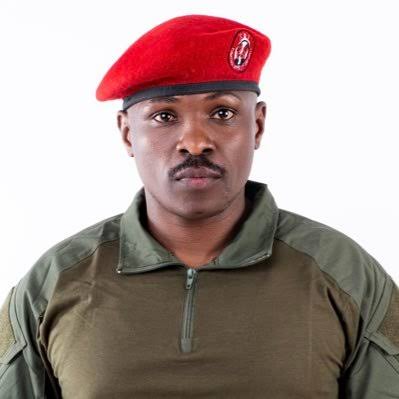
Kenyan presidential aspirant and former Kenya Defence Forces (KDF) soldier Patrick Osoi has drawn sharp criticism online after warning Nigerian billionaire Aliko Dangote not to rush construction of his proposed oil refinery in Kenya, claiming he would send the businessman back to Nigeria if elected president.
In remarks delivered to supporters of his Lions Movement, Osoi said Kenya had local businesspeople capable of building a refinery and suggested Dangote’s project would no longer be needed under his leadership. The comments triggered a debate among Kenyans and Nigerians on social media, with critics questioning his position on foreign investment while others defended the idea of prioritising domestic businesses.
“I want to tell Dangote, please don’t hurry up to start the refinery, because by next year, to February, the time I’m sworn in as the president of this country, Kenya, you’ll be back going to Nigeria, because we have a refinery which can do that job. We also have business people in this country who can do that job,” Osoi said.
“That is what we stand for, and this is the home of our movement,” he added.
Osoi’s remarks were directed at Dangote’s proposed multibillion-dollar refinery in Lamu, a major industrial investment that was formally launched at a groundbreaking ceremony on September 30, 2026, attended by Kenyan President William Ruto and several African leaders. The proposed facility is designed to process up to 700,000 barrels of crude oil per day and is intended to serve markets beyond Kenya.
The presidential aspirant’s warning quickly became a subject of online debate, with reactions ranging from criticism of his comments to arguments about whether African countries should rely on their own entrepreneurs to build major industries.
Some users questioned why Kenyan businesspeople had not already built a refinery if the country had sufficient local capacity and investment interest. Others argued that constructing a facility of the proposed scale requires substantial financing, technical expertise, infrastructure and long-term commercial planning, rather than political declarations alone.
One commenter challenged the suggestion that local businesspeople were ready to undertake the project, arguing that none had demonstrated a willingness to build a refinery of comparable scale or enter into the partnerships necessary to deliver it.
Others questioned why opposition to Dangote’s proposed investment was being raised when foreign investors from Western countries and Asia also operate businesses across Kenya. They argued that an African investor should not automatically face a different standard simply because he comes from another African country.
Nigerian social media users also joined the discussion. Some defended Dangote’s right to invest elsewhere on the continent, while others urged him to concentrate on Nigeria rather than become involved in disputes over Kenya’s industrial development.
One Nigerian commenter argued that Dangote should focus on his home country, while other users framed the controversy as a test of African solidarity and the willingness of countries to welcome investment from successful businesses elsewhere on the continent.
The debate also exposed differences over the meaning of economic self-reliance. Supporters of local investment argued that Kenya should develop its own industrialists and retain more of the economic benefits generated by large projects. Others countered that domestic businesses and foreign investors can coexist, and that investment from an African entrepreneur can still create employment, industrial capacity and opportunities for local suppliers.
Several commenters criticised Osoi’s suggestion that Dangote would be forced to leave Kenya after a possible change of government, questioning whether such a threat would reassure investors considering long-term commitments. Others argued that a presidential aspirant should explain how local investors would finance and deliver a refinery rather than simply promise to reject the existing proposal.
However, the online reactions did not represent a single position. Some users supported the principle of building domestic capacity and argued that African countries should develop businesses capable of competing in large-scale industries. Others defended Dangote’s right to pursue a project in Kenya and said that the proposed refinery could provide opportunities for Kenyan workers, businesses and investors.
The controversy comes at a time when the Lamu project is being presented by its proponents as a major investment in East Africa’s energy infrastructure. Dangote has said the refinery would serve a broad regional market and that the project could involve participation from other African countries.
The project has also faced scrutiny over land rights and environmental concerns. A Kenyan court issued orders maintaining the status quo in a land dispute involving residents who say their ancestral land is affected by the proposed development. Dangote has said the legal challenge would not stop the groundbreaking ceremony, although the court process could affect activities at the site.
Osoi’s comments therefore enter an existing debate over the project’s economic benefits, local participation and the responsibilities of government when negotiating with major investors. His position puts emphasis on Kenyan business ownership, but his remarks have also raised questions about whether rejecting an outside investor would necessarily result in a viable domestic alternative.
Osoi is a presidential aspirant seeking to contest Kenya’s 2027 election, not a president-elect. His statement that he would be sworn in by February next year reflects his political ambition and should not be interpreted as a confirmed electoral outcome.
At the centre of the dispute is a question that extends beyond Dangote himself: how should African countries balance the development of domestic businesses with the need to attract investment, expertise and capital from elsewhere on the continent?
For critics of Osoi’s remarks, the answer is not to force an African investor out but to create conditions in which local companies can grow alongside international businesses. For those who support greater domestic ownership, the controversy highlights the need for governments to invest in the capacity of their own entrepreneurs to deliver large industrial projects.
The online debate is likely to continue as the Lamu refinery project moves through its development process and Kenya approaches another election cycle. Osoi’s warning has brought the question of local industrial capacity into the political conversation, but whether Kenyan businesses could independently deliver a refinery of the proposed scale remains a question that requires evidence of financing, technical capability and a credible development plan.