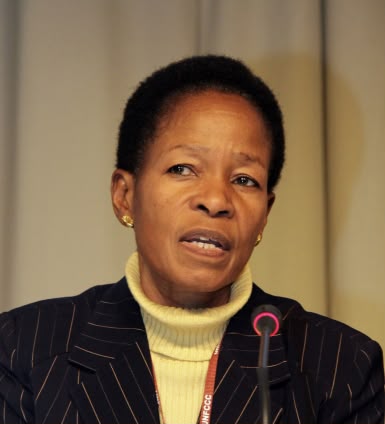
Former Tanzania Minister for Lands, Housing and Human Settlements Development Professor Anna Tibaijuka has urged East African Community (EAC) leaders to stop treating major infrastructure investments as competing national projects and instead plan them as parts of a single regional economic system.
Tibaijuka argues that proposed oil refineries, petroleum pipelines, gas infrastructure and ports should be coordinated across national borders to improve economic efficiency, attract investment and prevent unnecessary competition among partner states.
Her intervention comes as East Africa considers major energy projects in Kenya, Uganda and Tanzania, including the Dangote East Africa refinery planned for Lamu, Uganda’s proposed refinery at Hoima and a proposed petroleum hub in Tanga. The projects have raised questions about whether the region could end up investing in more refining capacity than its domestic market can absorb.
The Dangote refinery project reached its groundbreaking stage in Lamu on September 30, 2026. The planned facility is designed to process up to 700,000 barrels of crude oil per day, with its developers targeting completion around 2030. Uganda has continued with plans for a smaller refinery at Hoima, while Tanzania and Uganda have explored cooperation with energy trader Vitol on a petroleum hub at Tanga. The projects remain at different stages of development and should not be understood as three completed or fully operational refineries.
In her argument, Tibaijuka says the debate should not be reduced to whether Lamu or Tanga will emerge as the leading investment destination, or whether Kenya or Tanzania will gain more from the region’s energy infrastructure.
“Hoima, Lamu, Tanga, the EACOP pipeline, gas pipelines and our ports should be assessed as parts of one regional economic system,” she said, stressing that the region needs to consider how the different investments can work together.
The former minister’s position reflects a wider economic question facing East Africa: how to ensure that major investments deliver the greatest benefit for the region as a whole, rather than being assessed only through their contribution to individual national economies.
A refinery can create jobs, stimulate industrial development and reduce dependence on imported fuel. However, such benefits depend on factors including the cost of construction, access to crude oil, transport and storage infrastructure, the availability of customers and the ability to sell refined products competitively. Building several large facilities without a coordinated assessment of demand could expose investors and governments to unnecessary costs.
A recent analysis in The EastAfrican estimated that the region currently consumes the equivalent of approximately 416,000 barrels of refined petroleum products a day, while the proposed Lamu, Hoima and Tanga refineries could together provide close to one million barrels of daily processing capacity. The comparison raises questions about whether regional demand, export markets and future consumption growth will be sufficient to sustain all the proposed projects commercially.
Tibaijuka is not arguing that every country must abandon its own infrastructure ambitions. Her central point is that governments should first determine what the regional economy needs and then establish how each project can contribute to that shared objective.
Under such an approach, a refinery in one country could serve customers across several EAC member states, while pipelines, ports, storage facilities and transport corridors could be developed to connect producers with processing centres and markets. Governments could then assess how employment, investment, energy security and other benefits should be distributed fairly across the region.
The argument also raises a distinction between economic efficiency and the political distribution of benefits. A project may be more commercially efficient in one location, but neighbouring countries will still want to know how they can participate in its gains. Tibaijuka’s approach suggests that regional planning should address both questions rather than encouraging countries to duplicate expensive facilities in an effort to secure national benefits.
Her position is consistent with a concern previously expressed by Ugandan President Yoweri Museveni about countries building similar facilities without adequate regional coordination. Museveni has maintained that Uganda intends to proceed with its planned Hoima refinery even as the much larger Lamu project moves forward. Uganda has also pursued cooperation with Tanzania on the Tanga petroleum hub, illustrating how the region’s energy plans overlap.
Tibaijuka has therefore called for an in-depth regional study to guide investment planning towards 2050. Such a study would need to examine expected petroleum demand, the availability and movement of crude oil, refining capacity, export opportunities, pipeline connections, port services, financing requirements and the environmental and social effects of large infrastructure projects.
Long-term planning would also help governments assess whether proposed facilities should compete directly, specialise in different products or markets, or complement one another through shared transport, storage and distribution networks. It could give investors a clearer picture of regional priorities and reduce the risk of national decisions working against one another.
The East African Crude Oil Pipeline (EACOP), which is designed to transport crude oil from Uganda’s oilfields to the export terminal at Chongoleani near Tanga, provides one example of infrastructure that already links the economic interests of more than one country. Tanzania and Uganda have both invested in the project, which is central to plans for exporting Ugandan crude oil. Tibaijuka’s broader argument is that such cross-border connections should form part of a wider strategy covering energy production, refining, transportation and regional trade.
The stakes extend beyond petroleum. Ports, gas pipelines and other strategic infrastructure influence where industries are established, how goods move between countries and how efficiently businesses can reach regional and international markets. Decisions taken independently may serve immediate national priorities, but a lack of coordination can leave the wider region with gaps in connectivity or overlapping investments.
For Tibaijuka, the objective should be infrastructure that brings East African countries closer together economically. Rather than measuring success by which country attracts the biggest project, she wants regional leaders to assess how each investment contributes to shared growth and long-term competitiveness.
Her appeal comes at a consequential point for East Africa’s energy ambitions, with the Lamu refinery moving into its construction phase while the Hoima and Tanga proposals continue to develop. Whether the projects ultimately complement one another or compete for customers, capital and markets will depend on their costs, financing, implementation and the region’s future demand for refined petroleum products.
Tibaijuka’s proposed regional planning exercise would put those questions at the centre of decision-making before governments commit further resources. By looking towards 2050, she argues, the EAC can treat its infrastructure as an interconnected economic system; one designed to unite its markets and strengthen regional prosperity rather than deepen competition between neighbouring countries.